
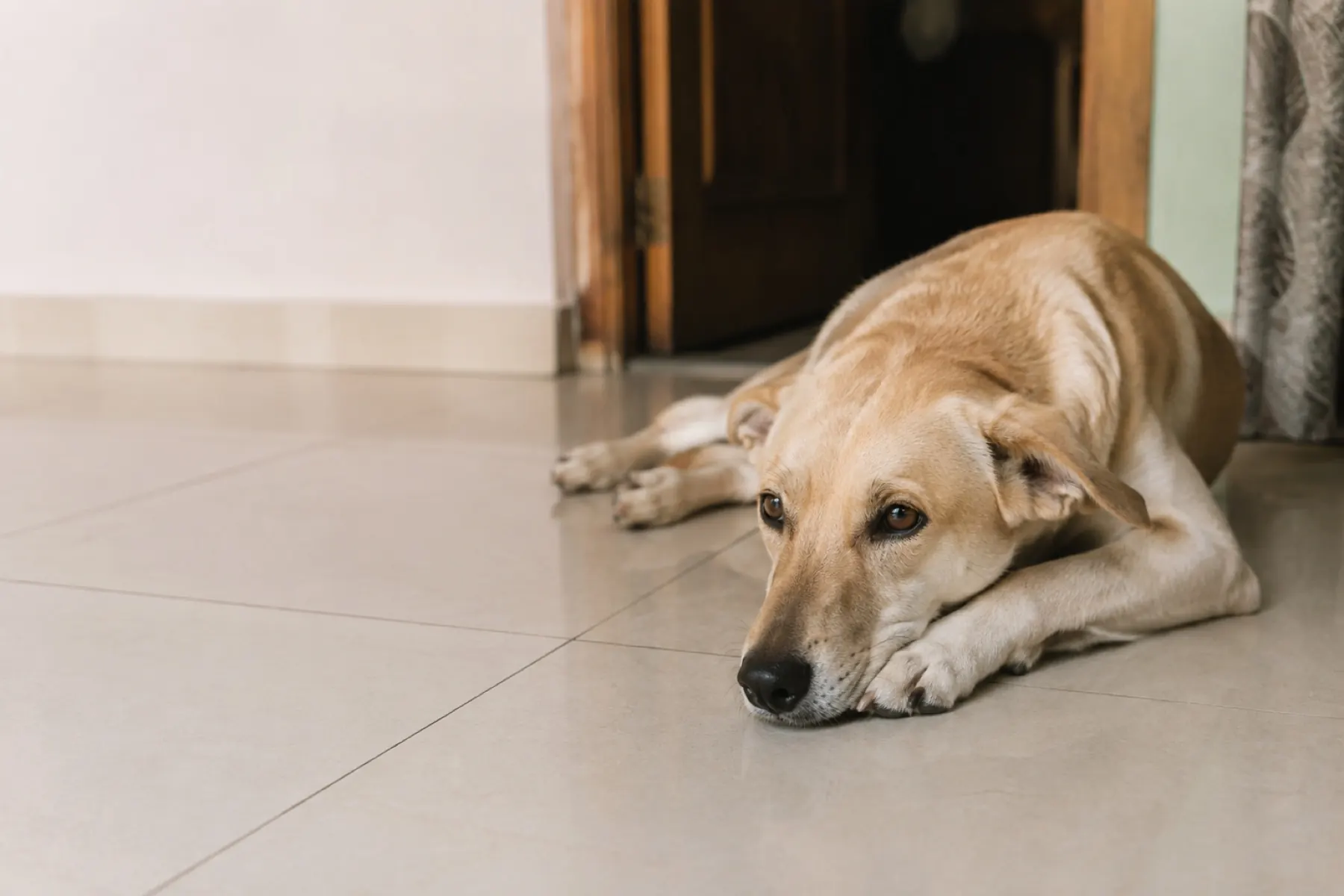
Vomiting is a sign, not a disease
If you are asking why is my dog vomiting, begin here: vomiting is the body pulling an alarm. It tells you something is wrong. It does not tell you what.
That is why the first question most pet parents ask — what can I give to stop it — is the wrong one. Silencing an alarm does not switch off whatever pulled it.
The useful information is in the detail: whether it is vomiting or regurgitation, what came up, how often it is happening, and whether it is settling or getting worse. Those four things decide what needs to happen next — monitor at home, or go to a vet.
How vomiting actually happens
Picture one alarm bell in your dog's brain. Four separate wires can ring that bell, and silencing the bell never fixes the wire.
Once you can see four wires instead of one, the long list of possible causes stops being frightening and starts being a map. It also explains something that surprises most pet parents: a dog with a perfectly healthy stomach can still vomit.
Is this a watch-at-home night?
It will help choose the safest next step. Tick everything you have seen in the last few hours.
- Tick what applies to your dog. Your safest next step will appear here.
- Reasonable to rest the gut and watch. Rest the gut, offer small amounts of water often, and watch for eight to twelve hours. If anything on the emergency list appears, or the vomiting continues while your dog has eaten nothing, stop watching and get help.
- Worth a proper conversation with a vet. Vomiting that repeats over weeks, or comes with more drinking or weight loss, is the pattern that hides kidney, liver, hormonal and long-standing gut disease. This is a history and blood-test question, not a home one.
- Your dog needs to be seen today. This pattern can dehydrate a dog quickly or point to a blockage. Speak to a vet straight away so someone decides whether it is examination, imaging or fluids that is needed.
- Go to a physical veterinary clinic now. An emergency sign is selected. Arrange hands-on care immediately; do not wait for an online appointment and do not begin a fasting window.
Where the four wires sit
The same reflex, reached from four different places in the body. Tap a point to see which wire it belongs to and what it means for your dog.

The stomach and intestine. Spoiled food, a sudden diet change, worms, infection, or a swallowed object all send signals from here. A blockage behaves like a blocked drain: whatever goes in has nowhere to go but back up.
- Wire one: the gut. The stomach and intestine. Spoiled food, a sudden diet change, worms, infection, or a swallowed object all send signals from here. A blockage behaves like a blocked drain: whatever goes in has nowhere to go but back up.
- Wire two: kidneys and liver. When these organs stop clearing waste properly, that waste builds up in the blood and reaches the patch of brain that samples it directly. The dog vomits because the blood is dirty, not because the stomach is damaged.
- Wire three: the inner ear. The inner ear tracks balance. A car journey can disturb it, and that disturbance causes nausea and then vomiting, with a completely healthy digestive system.
- Wire four: the brain. Severe pain, fear, a head injury, or rising pressure inside the skull can trigger the vomiting reflex directly, without any signal from the stomach.
Start from what you actually saw
Choose the situation that matches your dog. Each one points towards a different wire, and a different next step.
The balance sensor, most likely
Vomiting during or just after a journey, settling once the car stops, is the classic pattern for motion sickness. The gut itself is usually fine, which is why this one is reassuring rather than alarming.
- After a car ride. The balance sensor, most likely. Vomiting during or just after a journey, settling once the car stops, is the classic pattern for motion sickness. The gut itself is usually fine, which is why this one is reassuring rather than alarming. What to do now: Rest the gut for three to six hours, offer small sips of water, then offer food. Mention repeat journeys to a vet, because this is manageable rather than something to endure.
- After leftovers or the bin. The gut's own sensors. Rich, oily or spiced human food, a raided bin, or something swallowed on a walk irritates the stomach lining quickly. This is the single commonest cause seen in Indian homes, especially the day after a function at home. What to do now: Rest the gut for six to twelve hours, water in small amounts often, then reintroduce plain food slowly. Watch for the vomiting continuing while the stomach is empty, which changes the picture.
- On and off for weeks. Worth looking beyond the gut. Vomiting that comes, settles, and returns is the pattern that hides longer-standing disease. Adrenal insufficiency is known among vets as the great pretender for exactly this reason, and long-standing gut inflammation behaves similarly. What to do now: This one needs a history and blood work rather than another round of home management. Book a consultation and bring the dates and details of previous episodes.
- With much more drinking. Think about the blood, not the stomach. Vomiting alongside noticeably increased thirst, more urine, weight loss or bad breath raises the possibility that waste products are building up in the blood and reaching the brain's chemical sensor. What to do now: Do not manage this at home. Blood and urine tests are the only way to answer it, so arrange a consultation and expect a physical visit for sampling.
- Retching with nothing coming up. Treat this as an emergency. Repeated unproductive retching, especially with a belly that looks swollen or feels tight, can mean the stomach has twisted. Large, deep-chested dogs are most at risk and this is measured in hours. What to do now: Go to a physical veterinary clinic immediately. Do not wait for an online appointment, do not offer food or water, and do not begin a fasting window.
This guide explains possibilities to help you choose a safe next step. It does not diagnose your dog, and more than one wire can be involved at once.
Is it vomiting, or regurgitation?
This is the first thing a vet works out, because it splits the possibilities almost in half. Most pet parents have never been told there is a difference.
Watch which one your dog does, and if you can film it, film it. That clip is often worth more to a vet than a long description.
When the problem is the gut itself
Dietary indiscretion is far and away the commonest cause. It is the leftover curry from last night's function, the plate someone left on the floor, the child who slipped him something under the table, or whatever he found on the walk and swallowed before you could stop him.
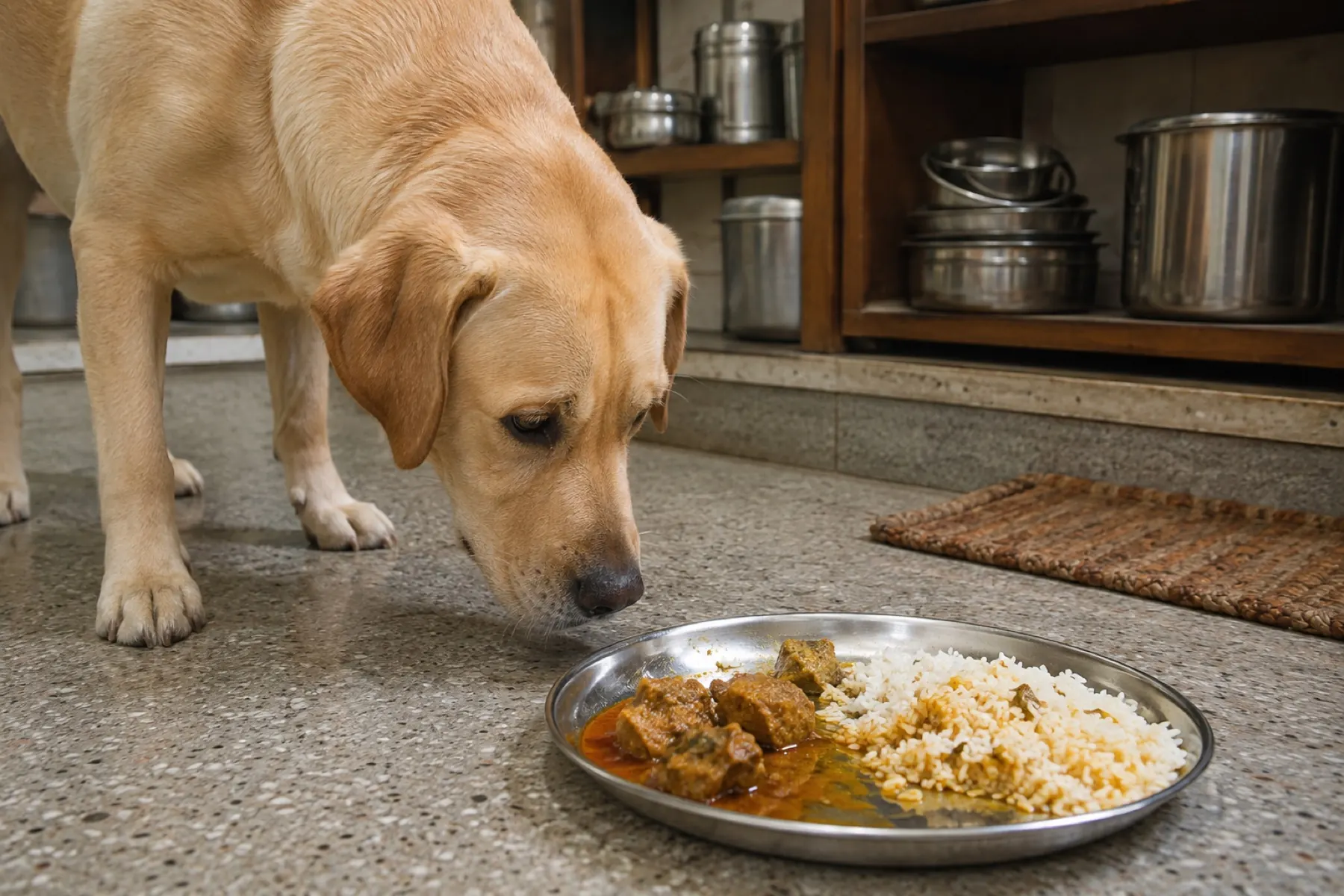
- A sudden change of diet does the same thing even when the new food is better quality. Gut bacteria need days to adjust, not hours.
- Worms and intestinal parasites are common and frequently missed, especially in puppies and dogs with outdoor access. The dog deworming schedule covers how often to deworm.
- Infection. In an unvaccinated or partly vaccinated puppy, vomiting with diarrhoea, often bloody, must be taken seriously. Parvovirus moves fast and dehydrates a puppy in hours.
- Obstruction behaves like a blocked drain. A toy, a mango stone, a bone fragment or a length of thread lodges in the gut, and whatever goes in comes back up. The dog gets worse rather than better, and this is not one to watch overnight.
When the gut is fine and the problem is elsewhere
This is the part almost nobody expects, and it is why a vomiting dog sometimes needs a blood test rather than a stomach medicine.
When the kidneys stop clearing waste properly, that waste builds up in the blood and reaches the patch of brain that samples it directly. The dog vomits because the blood is dirty, not because the stomach is damaged. Liver disease works through the same wire. Pancreatitis often follows exactly the kind of rich, fatty meal described above, and brings a painful belly and a dog who will not eat.
Hormonal disease belongs here too. Adrenal insufficiency is known among vets as the great pretender: vomiting comes and goes for weeks, the dog seems to recover, then slips again.
Toxins, medicines and irritants
Some things ring the bell by scraping the stomach lining directly. Others are absorbed into the blood and reach the chemical sniffer. Either way, the dog vomits.
- From outside the body: chocolate, xylitol in sugar-free gum and sweets, grapes and raisins, onion and garlic in quantity, rat poison, insecticides, cleaning fluids, and certain houseplants.
- Human medicines are a serious and avoidable problem. Painkillers made for people are among the commonest causes of poisoning in pets worldwide, and they can strip and ulcerate a dog's stomach lining.
- Never give your dog anything from your own medicine box, repeat a medicine prescribed for a previous illness, or use leftover antibiotics.
When the trigger is balance, or the brain itself
These two are short, but leaving them out is what makes vomiting look random.
The inner ear tracks balance. A car journey disturbs it, that disturbance causes nausea, and the nausea causes vomiting. The digestive system is not involved at all, which is why a dog can vomit in the car and eat normally an hour later. If your dog does this on every journey, it is worth raising — it is manageable, not something to simply put up with.
The brain can also trigger the reflex on its own. Severe pain, real fear, a blow to the head, or rising pressure inside the skull can all set it off with no signal from the stomach. Vomiting after a fall, a road accident, or alongside unsteadiness, a head tilt, circling or a change in behaviour is not a digestive problem and should be seen the same day.
Dog vomiting white foam, yellow foam or blood: what it means
Look before you clear it away. The colour and content genuinely narrow things down.
- Yellow or greenish fluid usually means an empty stomach and bile that has flowed backwards into it. Early in the morning, in a dog who is otherwise well and holding weight, that often just means too long a gap between meals. A small late meal frequently settles it — though this is a conclusion a vet reaches by ruling other things out, not a label to give your own dog.
- White foam is saliva and stomach fluid from an empty or irritated stomach. Be careful here: repeated retching that brings up only a little foam, in a dog whose belly looks swollen, is an emergency rather than an upset stomach.
- Undigested food some hours after eating suggests the stomach is not emptying as it should.
- Blood, either fresh red streaks or dark grainy material that looks like wet coffee grounds. Most owners do not recognise coffee-ground vomit as blood at all. It is.
- A stool-like smell points towards a blockage low in the gut and needs urgent attention.
Watching safely at home: resting the gut
Rest the gut, but do not starve it. For vomiting that looks like it came from the gut itself, hold food for six to twelve hours. Where the trigger is clearly a car journey, three to six hours is enough before offering food again.
That window does two jobs. It gives an irritated stomach lining time to settle, and just as importantly it is a test: if your dog is still vomiting when there is nothing to bring up, this is not a simple upset and it is time to see a vet.
Water matters as much as food. A dog who gulps a full bowl after vomiting will very often bring it straight back up, so offer a small quantity every twenty to thirty minutes instead. When you restart food, give a fraction of a normal meal, plain and bland, and build back up over the following day.
- No curd. It can aggravate an already inflamed stomach.
- No homemade electrolyte drinks. Unknown sugar levels and flavourings are the last thing a nauseated dog needs. No rice water either.
- If you want to offer something other than water, plain coconut water in small amounts is the kinder option.
- Do not extend the fast on your own. Going without food for a long stretch does its own harm; the point is a short, deliberate rest.
Go to a clinic now, without waiting
Do not watch these overnight, and do not wait for an online appointment first.
- Repeated retching that brings nothing up, especially with a swollen, tight or painful belly
- Blood in the vomit, either fresh red or dark like coffee grounds
- Vomit that smells of stool
- Several episodes within an hour, or vomiting that is clearly getting worse
- Vomiting that continues even though your dog has eaten nothing
- A known or suspected poison, human medicine, or swallowed object
- An unvaccinated or partly vaccinated puppy that is vomiting
- Collapse, severe pain, or a dog who cannot keep even water down
Repeated unproductive retching with a distended abdomen can mean the stomach has twisted. That is a surgical emergency measured in hours, not days, and large deep-chested dogs are most at risk.
What an online vet can do tonight
Most vomiting is not an emergency, and most of it does not need a car journey at ten at night. What it does need is someone who can tell which kind you are looking at.
What a video consultation can do now
- Separate vomiting from regurgitation properly, which halves the list of possibilities
- Take the history that narrows it down: timing against food, what came up, what changed
- Watch a clip of the actual episode, and look at your dog, the room and the bin he got into
- Set the right rest window for your dog rather than a generic one
- Define exactly what worsening looks like, so you know when to stop watching
What still needs a clinic
- An X-ray or scan when a blockage is suspected
- Surgery for a twisted stomach, and intravenous fluids for a dehydrated dog
- Blood tests for kidney, liver and pancreatic disease
Frequently asked questions
My dog vomited once and is now running around normally. Should I worry?
A single episode in a dog who is bright, drinking and behaving normally is usually not an emergency. Rest the gut briefly, offer small amounts of water, and watch for eight to twelve hours. What matters is the direction of travel: settling is reassuring, repeating or worsening is not.
My dog throws up yellow liquid early in the morning. Why?
That is bile in an empty stomach, and the usual trigger is too long a gap between the evening meal and the morning one. A small late-night meal often resolves it. If it happens often, or your dog is losing weight or seems unwell, have it checked rather than assuming.
How long should I stop food for?
Six to twelve hours for a gut-related upset in an otherwise healthy adult dog, or three to six hours after car sickness. Not longer without advice, and not at all for puppies, toy breeds, pregnant dogs or diabetic dogs.
Can I give my dog something from my own medicine cabinet?
No. Human painkillers in particular can cause serious stomach ulceration and bleeding in dogs, and some are dangerous even in small amounts. Nothing from your medicine box, and no leftovers from a previous illness.
Is vomiting a few times a week normal for some dogs?
No. Occasional car sickness is one thing, but a dog vomiting regularly over weeks needs investigation rather than management at home. Repeated vomiting is exactly the pattern that hides kidney, liver, hormonal and long-standing gut disease.
Get a clear answer for your dog tonight
Show a vet what happened, talk through what your dog ate and when, and leave the call knowing whether this is a watch-at-home night and exactly what would change that.
Talk to an expertThis content is for general educational purposes and does not replace a veterinary examination, diagnosis, or treatment. If your pet shows emergency signs or is seriously unwell, contact a physical veterinary clinic immediately.
Clinical references
- MSD Veterinary Manual: gastrointestinal obstruction in small animals
- MSD Veterinary Manual: gastric dilation and volvulus
- Merck Veterinary Manual: vomiting in dogs
- World Small Animal Veterinary Association: canine acute diarrhoea guidance
- Journal of Veterinary Internal Medicine: diagnosis of acute pancreatitis in dogs
- ASPCA Animal Poison Control Center: most frequent pet toxin exposures