How Online Vet Consultation Works in India
From choosing a registered veterinarian to showing your pet on camera and receiving a written plan—see exactly what happens before, during and after the video call.
 Clinically reviewed by Dr. Vikas Godara, DVM · 12 min read
A real veterinary appointment—without the stressful trip
You choose a veterinarian, book a time, share your pet’s history and meet on video. The vet listens, watches your animal, guides you through simple camera views and explains the safest next step. When appropriate, you finish with a written care plan in your account.
It turns uncertainty into a clear decision: what may be happening, what you can safely do now, what to monitor, and whether your animal needs a physical clinic—and how urgently.
From “I need a vet” to a plan you can follow
Select each stage to see the real Vetezy journey. These are product screens from the live pet-parent guides—not an invented illustration of how booking might work.
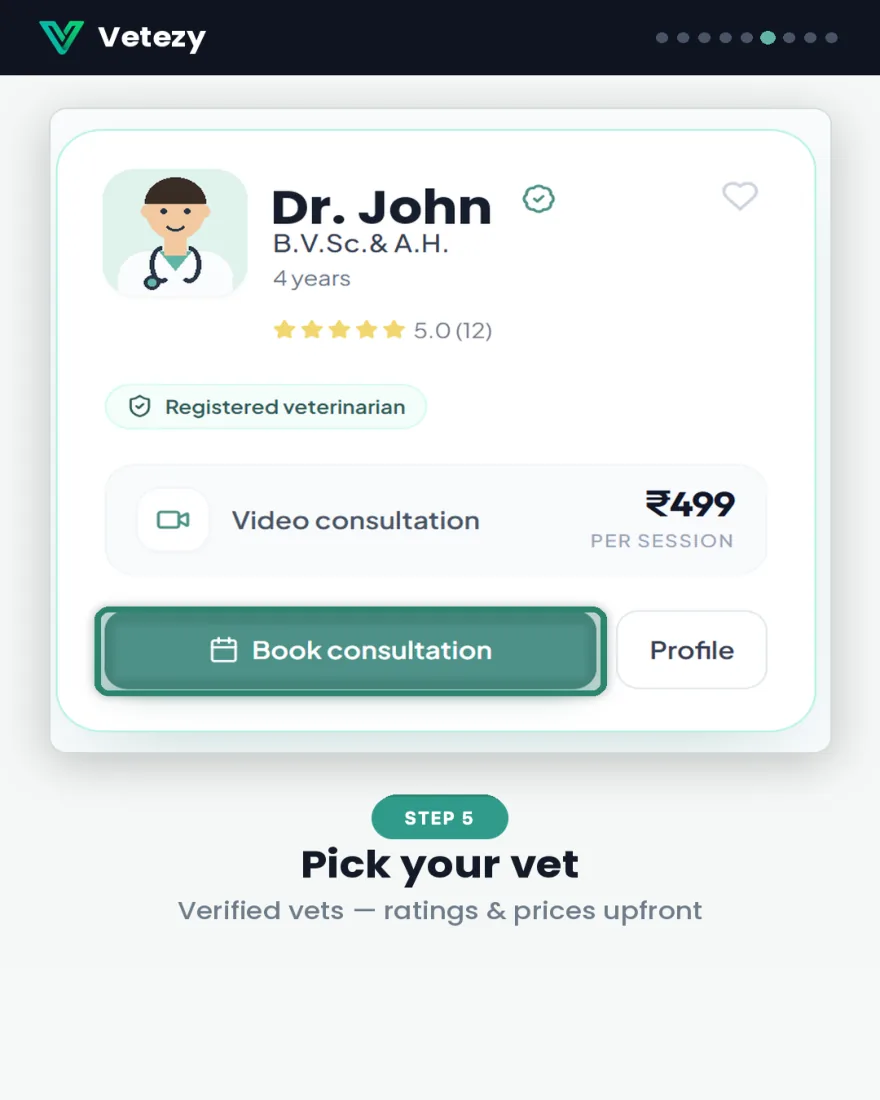
Compare qualifications, ratings and fees before you make a decision.
- 1. Pick the right veterinarian. Compare qualifications, ratings and fees before you make a decision.
- 2. Choose a time that works. Available slots and the consultation fee are visible before checkout.
- 3. Share the useful context. Select your pet and attach reports or photographs so the vet can prepare.
- 4. Meet your vet on video. See and speak to the veterinarian while keeping appointment information in view.
- 5. Continue with the same vet. Book a follow-up when the veterinarian needs to review progress or adjust guidance.
What online vets handle every day
Video works especially well when the decision depends on history, visible signs, behaviour and a guided look at the animal. The veterinarian will still say plainly when hands-on examination or testing is needed.
Skin, coat and itching
Rashes, hair loss, redness, scratching, ticks and changes that show clearly in good light.
Stomach concerns
Vomiting, loose stools, appetite changes and questions about hydration or diet.
Eyes and ears
Discharge, redness, head shaking, smell or swelling—plus a decision about urgency.
Energy and behaviour
Hiding, restlessness, reduced activity, sleep changes or a pet who simply seems “off”.
Nutrition and prevention
Feeding plans, weight, vaccination discussions, deworming and parasite prevention.
Follow-ups and second opinions
Reviewing progress, reports or an existing plan without another stressful journey.
Farm animals
Remote triage, feeding and preventive guidance for cows, buffaloes and horses.
Travel and routine care
Preparation, documents and practical home-care planning.
Is video right for what is happening now?
Select every sign that applies. This cannot diagnose the cause; it shows the safest type of next step.
- Select the signs you see. Your safest next step will appear here.
- A video consultation is a sensible next step. Your animal appears stable based on the signs selected. A vet can assess the concern, guide home care and tell you what to watch.
- Contact a veterinarian today. This change deserves same-day assessment. Video can begin the triage, but the vet may direct you to a physical clinic.
- Go to a physical clinic now. One or more emergency signs are selected. Arrange immediate transport; do not delay emergency care for a video appointment.
The vet guides you—one safe view at a time
You are not expected to know how to examine an animal. The veterinarian tells you where to place the phone, what to show and when to stop.
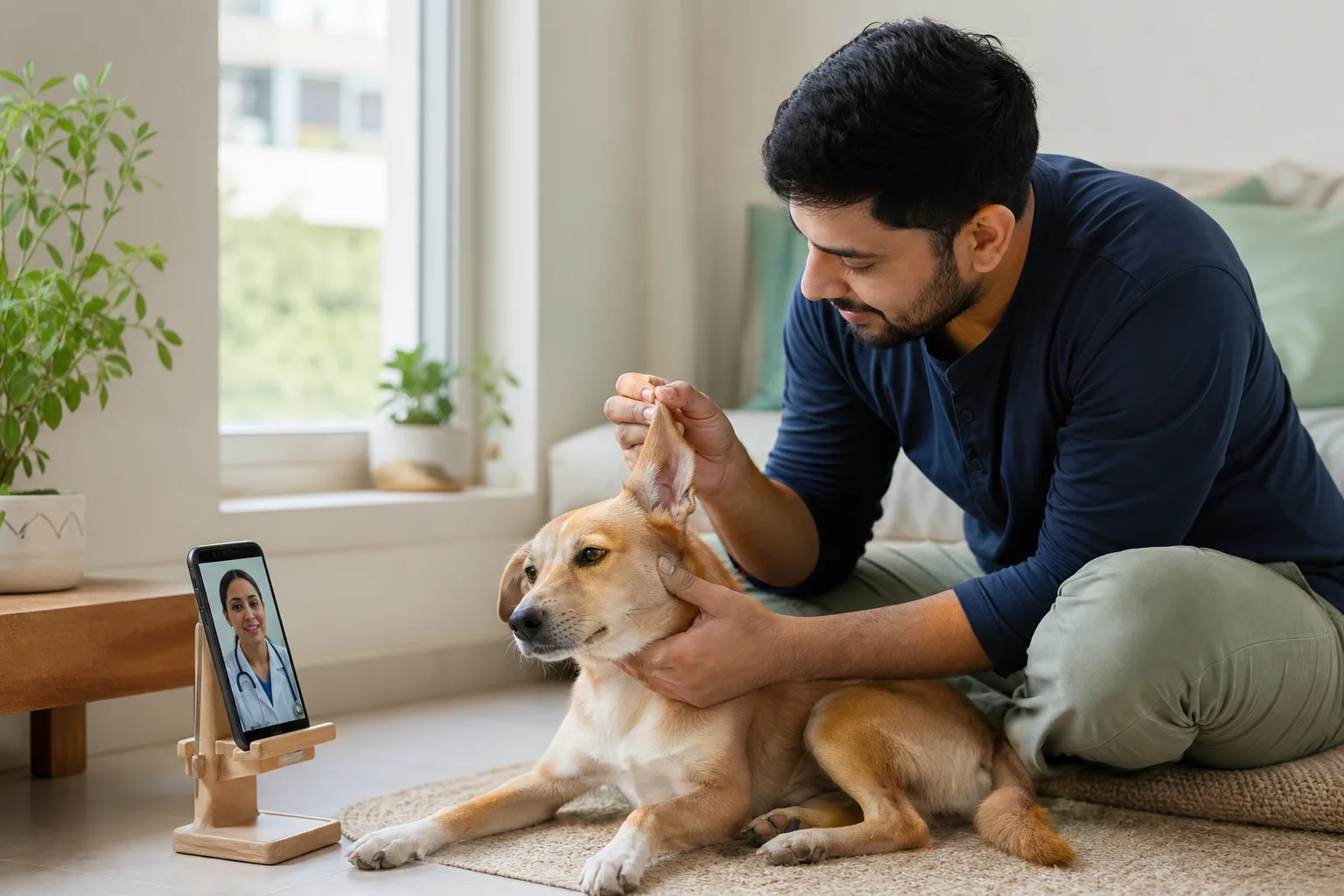
Move near a window and use the rear camera when asked. The vet may compare both sides and ask about smell, discharge or pain.
- Eyes and ears. Move near a window and use the rear camera when asked. The vet may compare both sides and ask about smell, discharge or pain.
- Skin and coat. Part the fur gently and hold the camera steady. A close, well-lit view can reveal redness, scaling, wounds, parasites or hair loss patterns.
- Breathing and posture. Let the animal rest naturally. The vet may watch chest movement, posture, alertness and whether breathing looks effortless or laboured.
- Walking and movement. A few steps on a non-slip floor can show gait and weight-bearing. Never force a painful limb or make an unsteady animal walk.
- Food, stool and records. Photographs, short symptom videos, vaccination records and previous reports often add context that is difficult to describe from memory.
What the consultation fee actually buys
The fee is not for “just a video call.” It is for a registered veterinarian’s focused time, clinical judgement and a documented plan—without travel, a waiting room or unnecessary stress for the animal.
Included in the consultation
- Live discussion of history and symptoms
- Guided visual observation
- Urgency and clinic-referral decision
- Written care or next-step plan
- A record saved in your account
What you avoid
- Unnecessary travel and waiting
- Stress for cats, anxious dogs or livestock
- Trying random remedies without guidance
- Forgetting verbal instructions later
- Starting from zero at every follow-up
Your advice stays with you
The final plan appears in the appointment details and can be downloaded for reference. If the veterinarian recommends a physical examination, you arrive better prepared—with the history, urgency and next questions already clear.
See Vetezy’s complete booking guides →For cows, buffaloes and horses, timely guidance can be a lifeline
Show the animal’s posture, movement, breathing, feed, dung or milk on camera. The veterinarian can help you judge urgency, prepare for an in-person visit and organise preventive care—especially when the nearest physical help is hours away.
A few signs should never wait for video
Use a video call for guidance while arranging transport only if it does not delay emergency care.
- Breathing difficulty or blue/grey gums
- Collapse, seizure or inability to stand
- Poisoning or serious trauma
- Heavy bleeding or deep wounds
- Severe bloat or repeated unproductive retching
- Straining with little or no urine
- Prolapse, difficult labour or uncontrolled pain
- Rapid deterioration in a very young animal
Dr. Vikas Godara, BVSc & AH, DVM
DVM, Oklahoma State University · VCI Reg. No. 7503 · Haryana Veterinary Council Reg. No. 2649 · USDA-accredited veterinarian · Member, AVMA and CVMA.
This guide supports informed decisions and does not replace a physical examination, diagnosis or emergency care.
Frequently asked questions
Can a veterinarian really assess my pet on video?
For many stable, everyday concerns, history plus guided visual observation provides enough information for useful triage and a practical plan. If a hands-on examination, test or procedure is required, the veterinarian should explain that clearly.
What do I need before the call?
A charged phone, reliable connection, good light and your animal nearby. Keep symptom notes, vaccination details, current medicines, short videos and previous reports ready if available.
What can the vet advise on a video call?
The veterinarian can provide a written care or next-step plan when professionally appropriate. Some conditions need a physical examination or tests before a vet can give specific advice.
What if my pet will not stay still?
Do not force or restrain a distressed animal for the camera. Tell the veterinarian what is happening; they can adapt the observation or recommend an in-person examination.
Can I use Vetezy for a cow, buffalo or horse?
Yes, Vetezy lists veterinarians for farm animals and horses. Video is useful for triage, preventive guidance and deciding what must happen next, while injections, procedures and hands-on examinations remain in-person work.
Where do I find the plan after the consultation?
Your care plan appears in the appointment details after it is finalised. You can review and download it, then book a follow-up when needed.
Talk to a registered veterinarian from home
Compare profiles and fees, choose a convenient time, meet on video and keep your written care plan in one place. First consultations are currently shown with 50% off at checkout.
Browse Vetezy veterinariansThis content is for general educational purposes and does not replace a veterinary examination, diagnosis or treatment. If an animal shows emergency signs or is seriously unwell, contact a physical veterinary clinic immediately. Prices and product screens can change; check Vetezy for current availability and fees.