Dog Ear Infection: Symptoms, Causes and Treatment
Dog ear infections explained—from brown discharge and monsoon flare-ups to the signs that mean it is time for a physical clinic.
 Reviewed by Dr. Vikas GodaraDVM (USA) · 11+ years across India & USA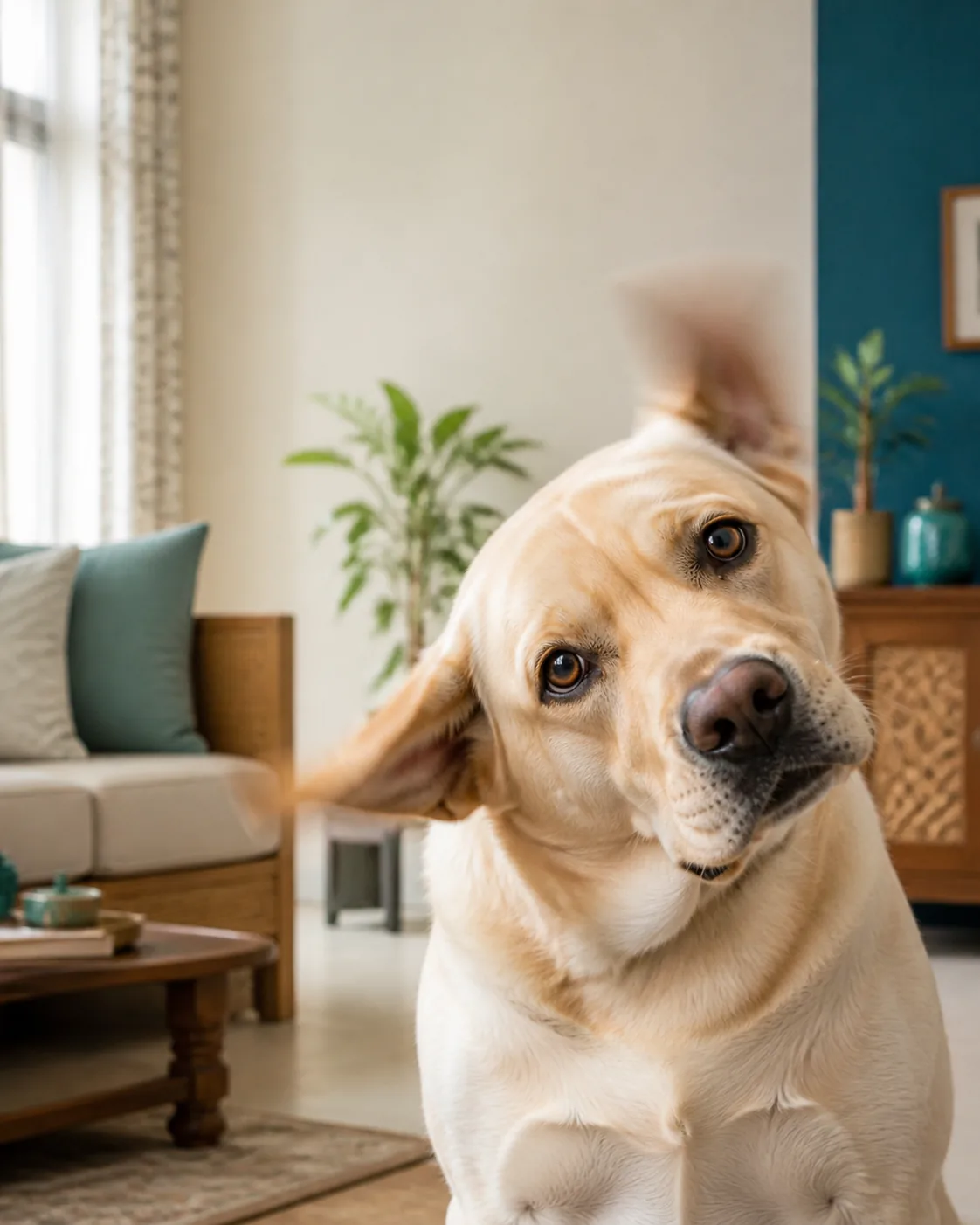
When a dog is shaking their head and scratching their ears, a new smell, redness or discharge often points to inflammation of the outer ear canal—called otitis externa. Because the canal bends like an L, the real problem may sit deeper than you can see.
Smell is information. Musty, foul and almost odourless debris suggest different patterns—but not a diagnosis.
Cleaning is not always treatment. Allergy, moisture, mites or a foreign body may be driving the problem.
Balance signs are urgent. Head tilt, circling or falling can mean a deeper ear problem.
What are you seeing at home?
Select every sign that applies. You will get a practical next step—not an online diagnosis.
Build a quick picture of what is happening.
This tool helps you choose a sensible next step. It does not diagnose the cause of an ear problem.
What does the discharge look—and smell—like?
Choose the closest description. Ear cytology and an otoscope exam are what turn a clue into a diagnosis.
clue
Musty or fermented
May fit yeast overgrowth
Common when allergy, humidity or trapped moisture inflames the canal—especially in floppy-eared dogs during monsoon.
These are common patterns, not a diagnosis. Mixed infections occur, and a damaged eardrum can change which products are safe.
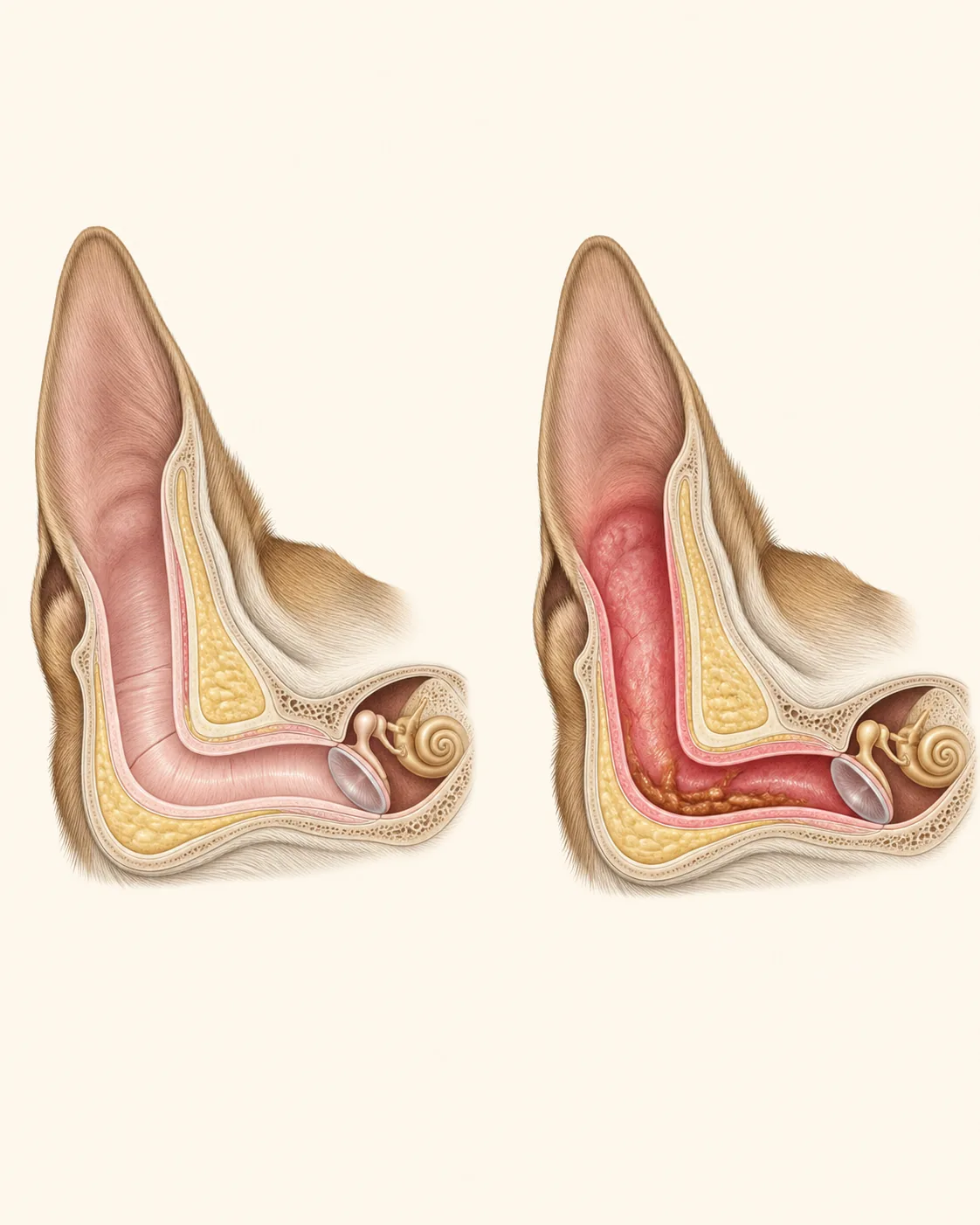
The ear canal turns a corner.
A dog’s canal travels downward, then inward. Airflow is limited, moisture lingers and infection can sit beyond what is visible from the opening.
Swelling traps wax, heat and moisture.
An earbud can compact debris around the bend, scratch the lining or injure the eardrum.
“I clean the ears, but the smell keeps coming back.”
Infection is often the smoke. Moisture, allergy or ear anatomy may be the fire.
Monsoon moisture
Floppy ears, wet walks, swimming and bath water create a warm, damp canal where microbes multiply.
Underlying allergy
Paw licking plus recurring ears is a useful clue. Ears may be the first place a skin allergy becomes obvious.
The wrong match
Yeast, bacteria and mites need different treatment. Guessing can fail and repeated misuse can encourage resistance.
Stopping too early
An ear can smell better before it is fully controlled. Follow the treatment and recheck plan your vet sets.
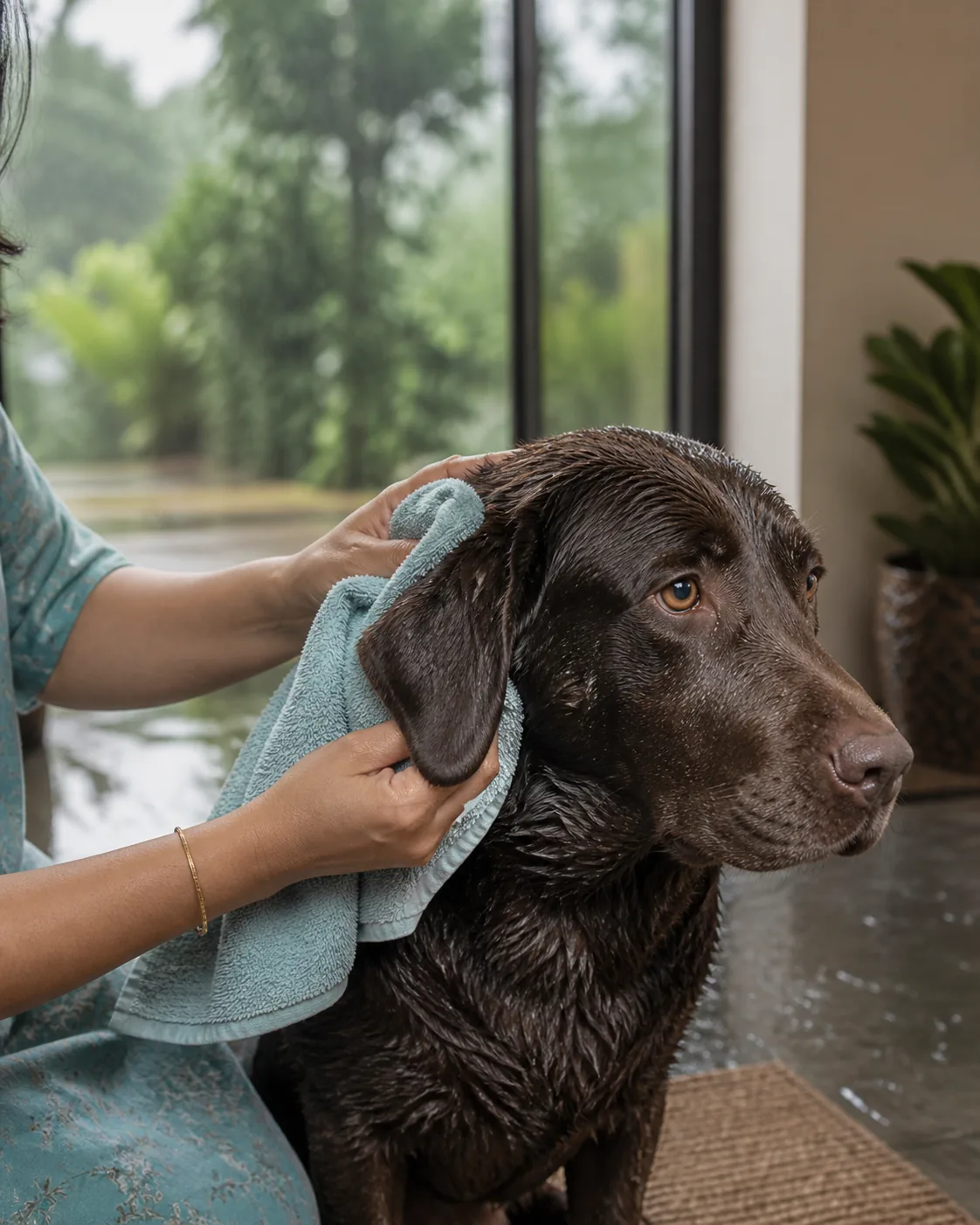
Dry visible ears after every bath, swim and wet walk.
Let your dog shake, towel the ear base and wipe only the visible flap. If your vet recommends a drying cleaner, use it on their schedule.
Nothing from the kitchen.
Nothing down the canal.
Inflamed ear skin is delicate. If the eardrum is damaged, unsuitable liquids can reach deeper structures.
Earbuds
They push debris deeper and can scratch or perforate.
Dettol or Savlon
Antiseptics can irritate inflamed ear tissue.
Spirit or peroxide
They can sting, burn and worsen irritation.
Oil or garlic mixtures
They trap moisture and do not identify the cause.
Human ear drops
Ingredients may be unsafe for a dog’s ear or damaged eardrum.
Human painkillers
Never give paracetamol, ibuprofen or aspirin unless a vet specifically directs it.
Cleaning—only when your vet says it is safe.
Use the arrows to walk through the technique. Cleaning frequency depends on the ear; over-cleaning can irritate it.
Use only a vet-approved dog ear cleaner
Ask which product is safe for this ear—especially if the eardrum may be damaged.
- Use only a vet-approved dog ear cleaner. Ask which product is safe for this ear—especially if the eardrum may be damaged.
- Fill the canal as directed. Lift the ear flap gently and apply the amount your vet recommends. Do not insert the bottle tip deeply.
- Massage the base for 20–30 seconds. A soft squelching sound means the cleaner is moving through the L-shaped canal.
- Step back and let your dog shake. Shaking helps bring loosened debris outward—something an earbud cannot safely do.
- Wipe only what you can see. Use soft cotton or gauze on the visible inner flap. Stop if your dog shows pain.
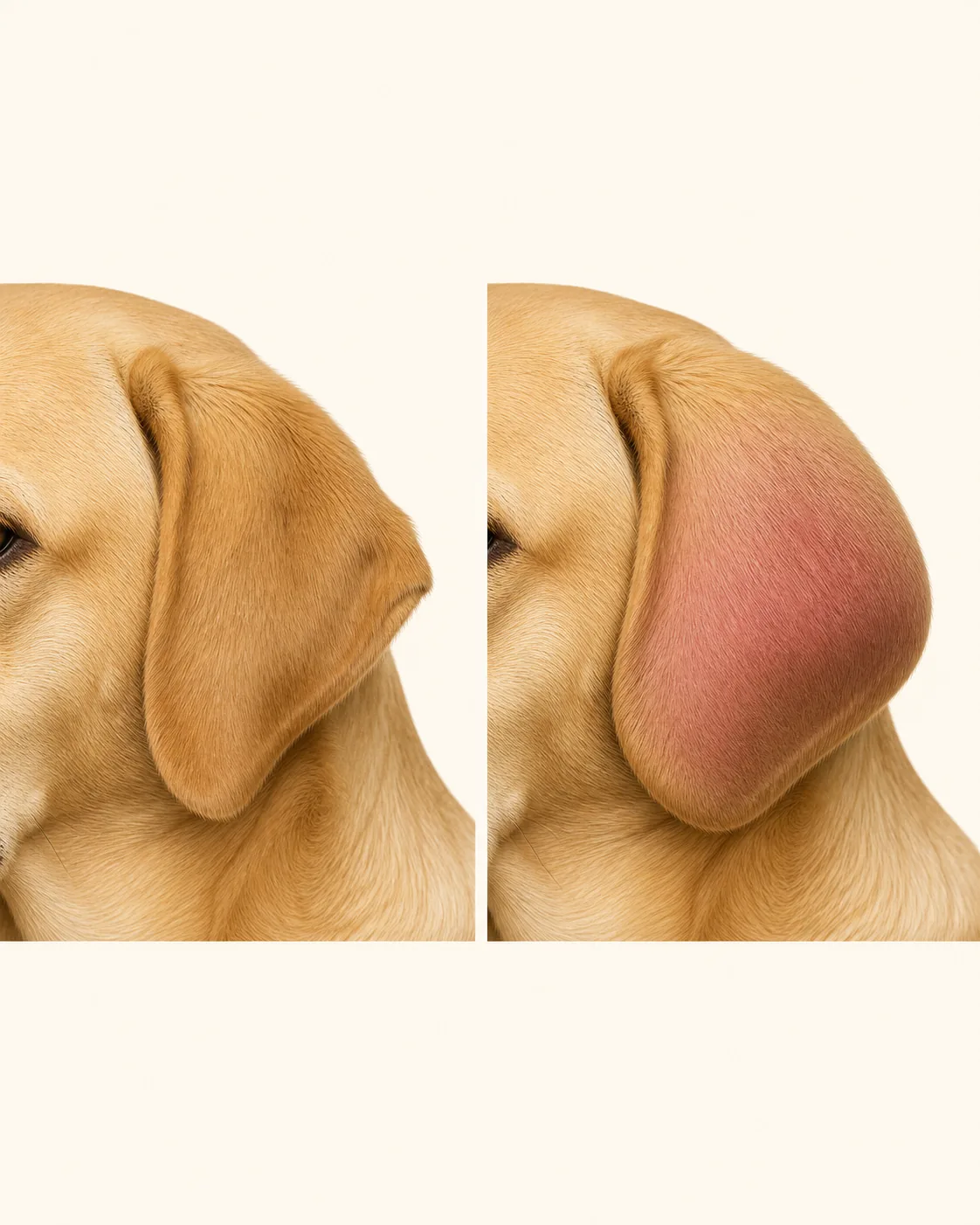
Violent shaking can cause an aural haematoma.
A blood vessel can burst inside the flap, making it soft, warm and swollen. This is not an abscess.
- Do not prick, drain or squeeze it at home.
- Arrange a physical veterinary visit within 24 hours.
- Treat the ear problem that caused the shaking too.
Video consult—or physical clinic?
Answer four short questions. When in doubt, especially with severe pain or neurological signs, choose a physical clinic.
No active warning signs selected.
Dry the visible ear after baths and wet walks. Seek advice if smell, redness, discharge, repeated shaking or pain appears.
What video can help with
- Review visible redness and discharge
- Discuss smell, season, swimming and recurrence
- Guide safe home care and cleaning technique
- Plan follow-up or an allergy work-up
What needs hands-on tools
- Looking down the canal with an otoscope
- Checking whether the eardrum is intact
- Ear cytology, deep flushing or sedation
- Removing a foreign body or treating a haematoma
Go to a physical clinic immediately
- Fixed head tilt, circling, stumbling or falling
- Eyes flicking side to side or one side of the face drooping
- Severe pain with fever, vomiting or refusal to eat
- Bleeding, a suspected foreign body or sudden violent one-sided shaking
Frequently asked questions
Practical answers to the questions pet parents ask most often about smelly ears and head shaking.
A new smell can be an early sign of inflammation or microbial overgrowth. Booking an assessment before marked pain or swelling develops usually makes the problem simpler to manage.
No. Products made for people may be unsuitable for dogs, and some ingredients can cause harm if the eardrum is damaged. Use only a product approved by a veterinarian for that specific ear.
There is no reliable kitchen remedy that identifies or treats yeast, bacteria, mites, a foreign body or a damaged eardrum. Keep the ear dry, avoid inserting anything, and get veterinary guidance. Do not use Dettol, Savlon, spirit, peroxide, oil or garlic preparations.
Floppy ear flaps reduce airflow, while humidity, bathing and swimming trap moisture. Allergy may inflame the canal too. A preventive drying and allergy plan is more effective than waiting for the smell to return.
They spread readily between pets, so household animals may need to be assessed together. Human irritation is uncommon and usually short-lived.
Dr. Vikas Godara, BVSc & AH, DVM
BVSc & AH, LUVAS, Hisar · DVM, Oklahoma State University · 11+ years of veterinary experience across India and the USA.
VCI Reg. No. 7503 · Haryana Veterinary Council Reg. No. 2649 · USDA-accredited veterinarian · Member, AVMA (No. 323100) & CVMA (No. 49706)
Still worried about your dog’s ears?
Speak with Dr. Godara or another available Vetezy veterinarian from home. Get a clear next step—and an honest referral to a clinic when hands-on care is needed.
your first consultation with any Vetezy veterinarian
Book an online consultation →