
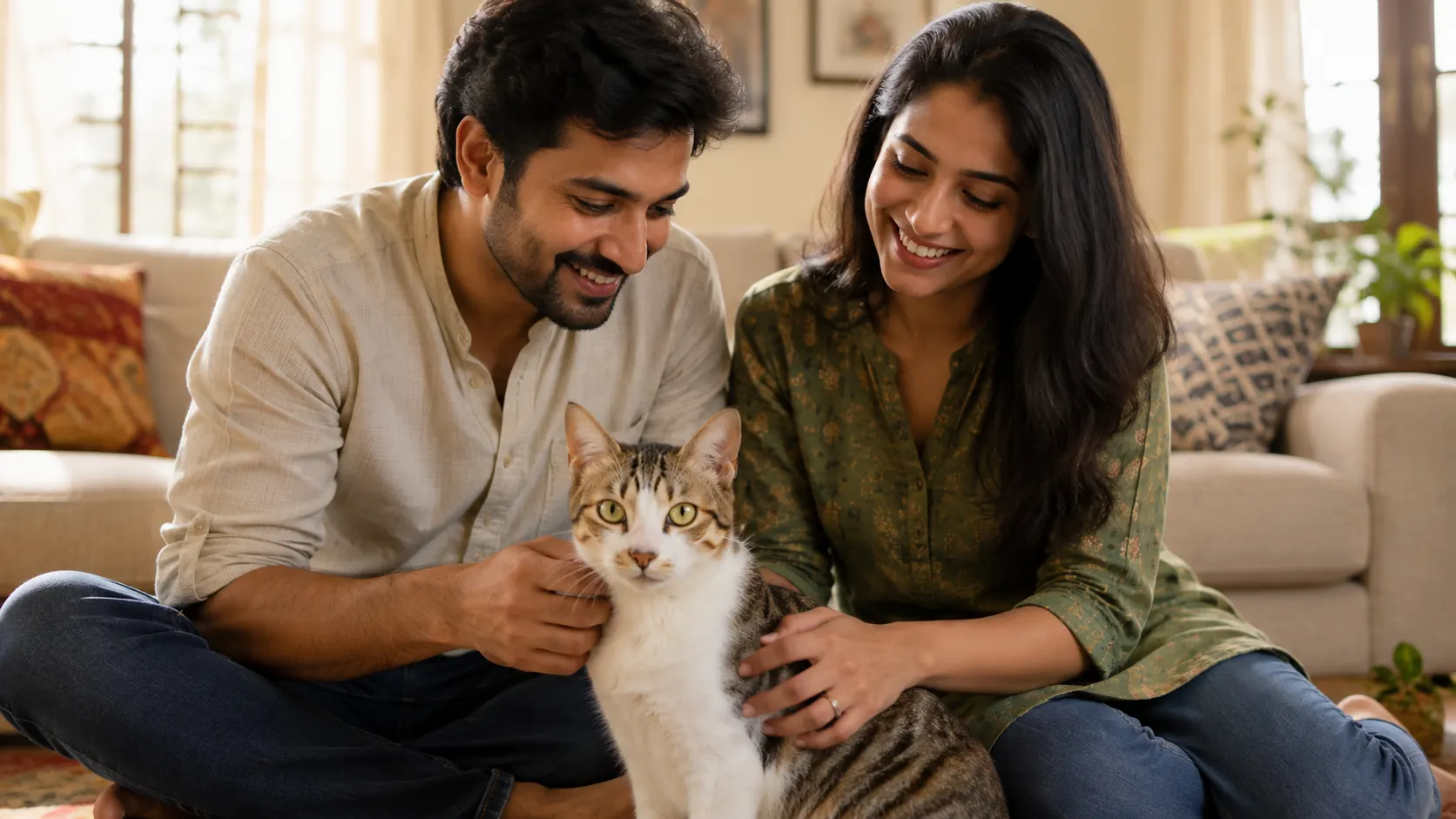
Most cats in India need two core vaccines
The first is a single combined injection covering feline panleukopenia, herpesvirus-1 and calicivirus. The second is rabies, which is core here because India is rabies-endemic. International guidance says a kitten's course starts no earlier than 6 weeks of age and repeats every 3 to 4 weeks until at least 16 weeks. It is the completed series, not any single injection, that protects.
After the first year, low-risk adult cats are generally revaccinated no more often than every three years, rather than annually. Rabies follows its own product leaflet and any local rules.
There is no single correct chart for every cat. Your veterinarian sets the plan from your cat's age, health, origin, lifestyle and the products available locally.
Where is your cat right now?
It will help choose the safest next step. Select everything that applies.
- Select what applies to your cat. Your safest next step will appear here.
- Note the next due date. Keep the card somewhere you can find it, and check with your vet whether your cat's interval should be annual or triennial based on its actual risk.
- A video consultation is a practical first step. Have the vaccination card ready if one exists. A veterinarian can work out what was given, whether a restart is needed, and the right interval for your cat's risk level.
- Speak to a veterinarian promptly. A kitten's protection depends on completing the series on time. A veterinarian can confirm where the course should resume and set the remaining dates.
- Contact a physical veterinary clinic immediately. An emergency sign is selected. Arrange hands-on care now; do not wait for an online appointment.
Cat vaccination schedule by age: chart for India
| Age | Vaccine | Notes |
|---|---|---|
| 6–8 weeks | First FVRCP (panleukopenia, herpesvirus-1, calicivirus) | No earlier than 6 weeks; no live vaccines under 4 weeks or in pregnant cats |
| Every 3–4 weeks | FVRCP booster | Each dose is a fresh attempt once maternal antibodies have faded |
| 16 weeks or later | Final kitten FVRCP dose | The dose at or after 16 weeks matters most |
| Up to 20 weeks | Extra doses in high-risk settings | Rescues, shelters and crowded multi-cat homes; sometimes 2–3 week intervals |
| Kitten course | Rabies (core in India) | Timing follows the licensed product leaflet and local rules |
| Under 1 year, risk-based | FeLV | Test before vaccinating; matters most in multi-cat households |
| About 6 months | Core revaccination | Closes the gap for a kitten that failed to respond to its last dose |
| 3 years, then every 3 years | Core booster for a low-risk indoor cat | Cat-flu components may be repeated yearly for high-risk cats, 1–2 weeks before boarding |
Why the kitten course is a series
Antibodies from the mother's milk protect a newborn kitten, but they also block the vaccine from working — and they fade at unpredictable ages. Repeating the dose across the window is what makes sure one lands after they have gone.
Start no earlier than 6 weeks
Kittens under 4 weeks old should not be given live attenuated vaccines, and neither should pregnant cats.
- Start no earlier than 6 weeks. Kittens under 4 weeks old should not be given live attenuated vaccines, and neither should pregnant cats.
- Booster every 3 to 4 weeks. Each dose is a fresh attempt to reach the kitten once maternal antibodies have faded enough to allow a response.
- Continue until at least 16 weeks. The dose at or after 16 weeks matters most. A kitten that has had only its first injection is not yet reliably protected.
- Higher risk? Continue to 20 weeks. In rescues, shelters and crowded multi-cat homes, guidance allows the series to run longer, sometimes at 2 to 3 week intervals.
Which vaccines does a cat in India actually need?
The combined core vaccine (FVRCP). One injection covering three viruses: feline panleukopenia virus, a severe and often fatal disease in unvaccinated kittens, and feline herpesvirus-1 and calicivirus, the two main causes of the sneezing and eye-discharge illness usually called cat flu. You will see it written as FVRCP, RCP or simply the trivalent; they all mean the same combination.
Rabies. The second core vaccine here. Global guidance treats rabies as core wherever the disease is endemic, and India is. Rabies is effectively always fatal once signs appear, in cats and in people. Our rabies vaccine guide for dogs and cats covers the schedule, the price in India and the certificate.
Feline leukaemia virus (FeLV). Risk-based rather than core. Guidance recommends it for cats under one year old in regions where the virus is common, and reliable prevalence figures for India are not established. It spreads mainly through saliva — mutual grooming, shared bowls and litter trays — so a single indoor cat is in a very different position from a kitten joining a multi-cat household. A cat should be tested for the virus before being vaccinated against it, because there is no benefit in vaccinating a cat that is already infected.
How often do adult cats really need boosters?
Current guidance suggests revaccinating at about 6 months of age rather than waiting for the traditional 12 to 16 month booster. Doing it earlier closes the gap for any kitten that failed to respond to its final kitten dose.
After that, a low-risk cat — typically a single indoor cat that does not board — has the core vaccine repeated at 3 years of age and then no more often than every 3 years. The duration of immunity for the panleukopenia component is long.
A higher-risk cat is different. In a multi-cat household, a boarding cattery or a crowded environment, the cat flu components may be repeated as often as annually, and guidance suggests revaccinating 1 to 2 weeks before a known exposure such as boarding, so protection is in place in time rather than on the day.
Rabies is the exception to all of this. Its interval is set by the licensed duration of immunity for the specific product used — there are both one-year and three-year products — and by any local rules. That is a question for the clinic holding the vial.
Does an indoor cat in India need vaccinating?
Reduced risk is not the same as no risk, and the honest answer has two halves.
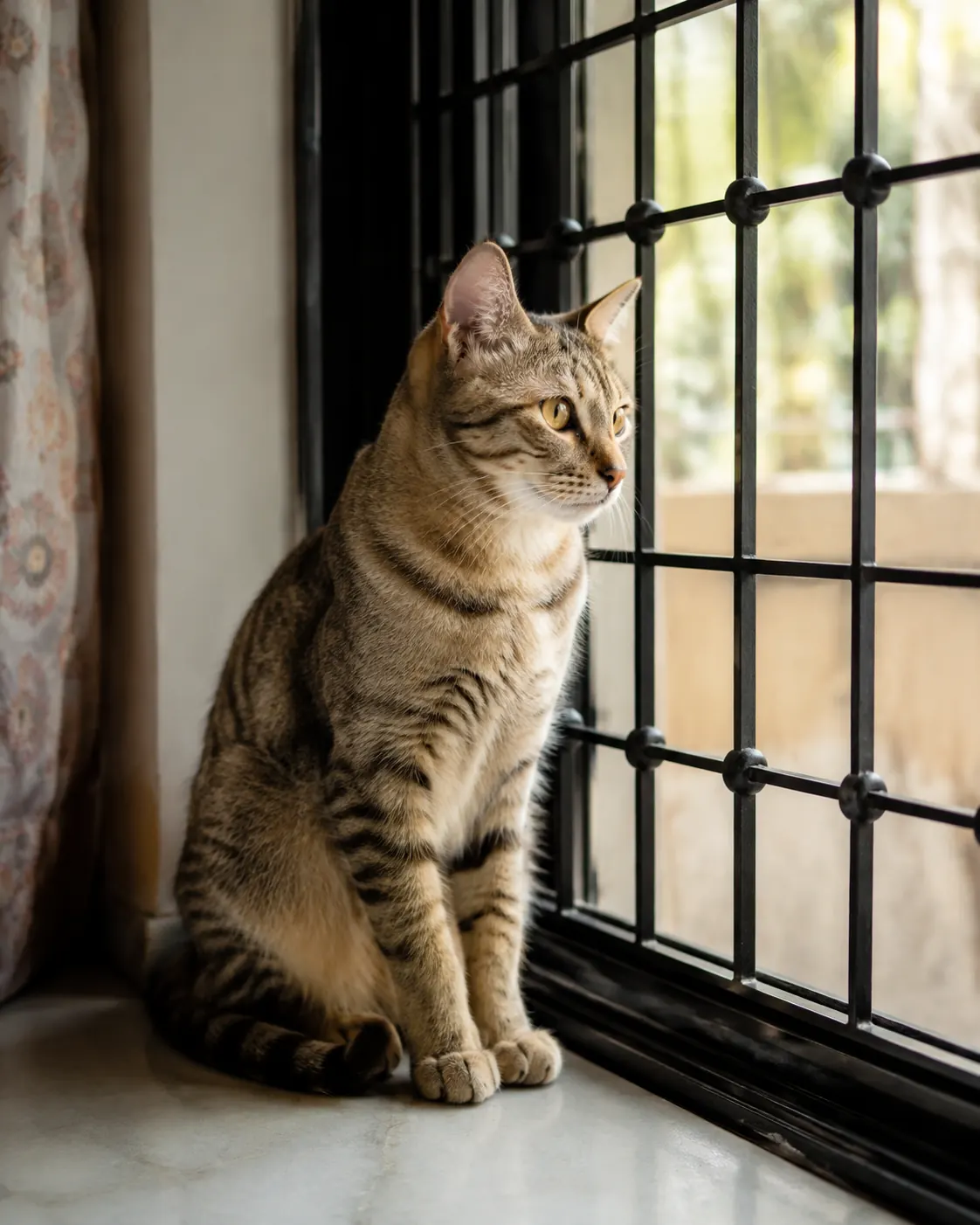
Panleukopenia is a hardy virus that can travel indoors on shoes, hands and clothing. Cat flu viruses are widespread. Windows, grilles and balconies in most Indian homes are not sealed barriers, and a nose-to-nose contact through a grille with a community cat is a real route of transmission. Cats escape, and they go to the clinic, to boarding when you travel, and sometimes to a groomer. Rabies is endemic here, which is why it stays core even for cats that rarely go out.
The other half matters too: for a genuinely low-risk indoor cat, the answer is usually a longer interval rather than a skipped vaccine. Triennial instead of annual core boosters is exactly the risk-based approach the guidance describes. Indoor cats are vaccinated, but often less frequently — and that nuance is worth raising with your vet rather than accepting either extreme.
What does cat vaccination cost in India?
Prices vary substantially by city, clinic and product, so treat the following as approximate ranges rather than quotes. A rabies dose is commonly in the region of ₹300 to ₹700. A full first-year kitten course — the series of core doses plus rabies — commonly totals roughly ₹1,500 to ₹3,000. Adult boosters cost less, because there are fewer visits.
A few things shift the total. A consultation fee may be charged separately from the vaccine, deworming is often scheduled alongside and priced separately, and feline leukaemia vaccination adds the cost of a test before the vaccine.
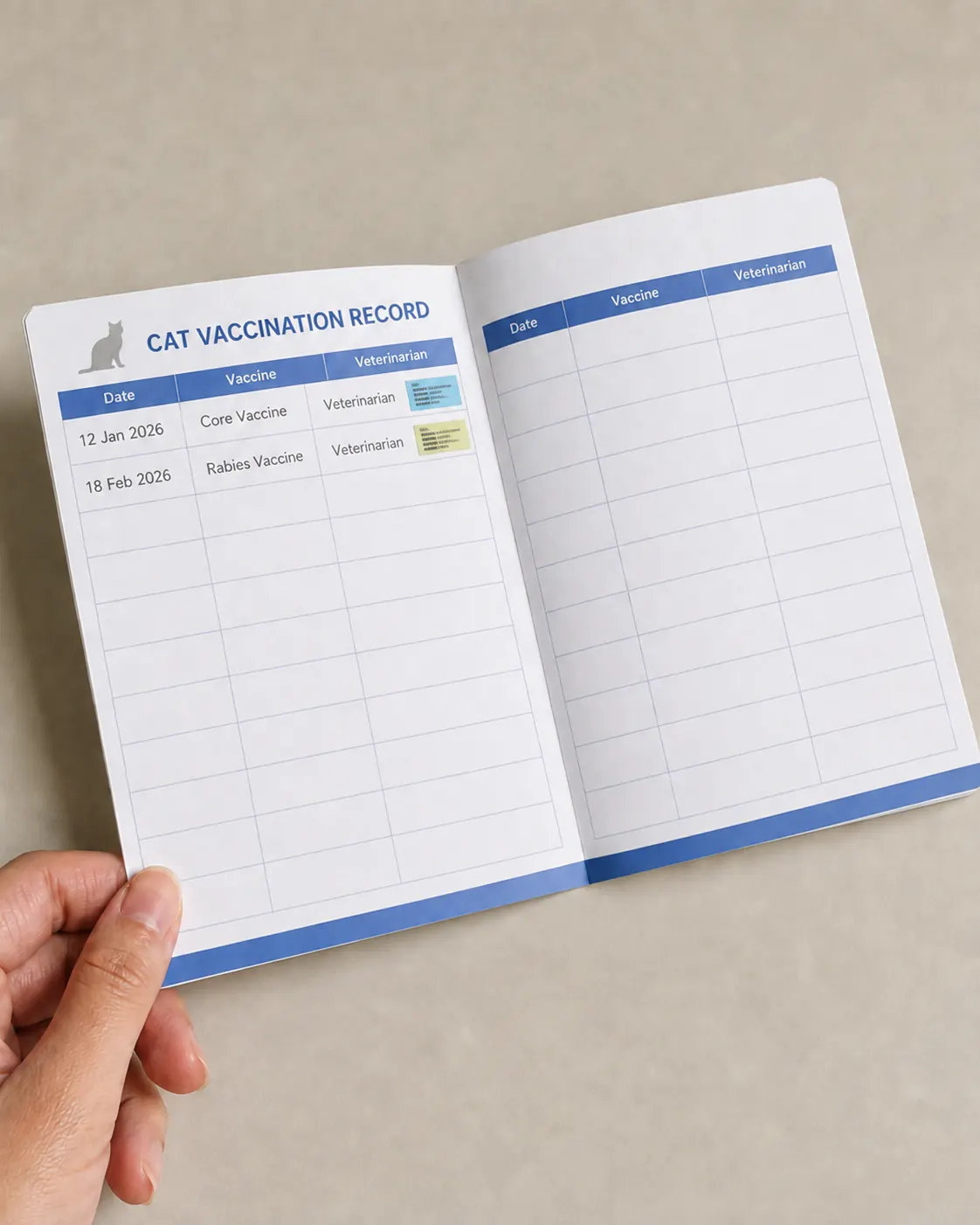
Your cat's vaccination card does most of the work
Almost every difficult question in this article — has my kitten finished the course, do we restart after a lapse, is a booster due — is answered by the card rather than by a chart on a website.
If you have it, photograph both sides before your next appointment. If you have lost it, the clinic that vaccinated your cat may still hold the record. If nobody has it, say so plainly: a veterinarian would rather plan from an honest gap than from a guess.
Contact a physical veterinary clinic immediately
Vaccination is preventive care, so these are the few situations where waiting is the wrong choice.
- Collapse, difficulty breathing, facial swelling or repeated vomiting within hours of a vaccination
- An unvaccinated kitten with vomiting, bloody diarrhoea and sudden lethargy
- A bite or scratch from an unknown, unwell or strangely behaving animal
If a person is bitten or scratched by an animal that might have rabies, wash the wound with soap and running water and go to a hospital the same day. That is not something to manage at home or over a video call. What to do after a bite or scratch has the full steps.
How an online vet can help with your cat's vaccination schedule
Most of the work in vaccination planning is reading records and assessing risk rather than handling the cat, which makes it an unusually good fit for a video consultation.
What a video consultation can do now
- Read your cat's existing vaccination card and identify what was actually given
- Work out where an interrupted or uncertain course should resume
- Judge risk level from your cat's age, origin, household and outdoor access
- Explain which non-core vaccines are and are not worth it in your situation
- Map the remaining schedule with dates so you know what is due and when
What still needs the clinic
- The injection itself, which is given hands-on by a veterinarian
- Blood testing, including a feline leukaemia test before that vaccine
- Any emergency assessment after a suspected vaccine reaction
Frequently asked questions
When can a kitten go outside after vaccination?
Protection is tied to finishing the course, not to a single date on the calendar. A kitten is not considered reliably covered until the series is complete — which is why the final dose at or after 16 weeks matters so much — and immunity takes a little time to develop after that last dose. Your vet will give you a date based on the doses your kitten actually received and the risk where you live.
I missed my cat's booster. Do we start the whole course again?
Usually not, and this fear causes a lot of unnecessary worry. An adult cat that completed a kitten series and then lapsed is in a very different position from a cat that was never vaccinated. Bring the card to your vet — in many cases the answer is a single dose rather than a restart. The answer depends on what was given and when, so do not guess it yourself.
Is the rabies vaccine legally required for cats in India?
India's rabies-elimination work under the National Action Plan, and the Animal Birth Control (Dogs) Rules, centre on dogs, which account for the overwhelming majority of rabies transmission to people. Registration and vaccination by-laws for pets vary between municipal corporations and many address dogs specifically, so check your own corporation's rules rather than relying on a general claim. Medically, the case for vaccinating cats against rabies in an endemic country stands on its own.
My cat is indoors and never meets other cats. Is the core vaccine really necessary?
Yes, though possibly less often than you have been told. Panleukopenia can come indoors on shoes and hands, and your cat will meet other cats at the clinic or in boarding. The realistic conversation is about the interval — triennial rather than annual — not about skipping it.
Can vaccines be given while my cat is unwell, pregnant or on medication?
That is exactly the judgement your vet makes before vaccinating, and it is why a health check comes first. Pregnant cats and kittens under 4 weeks should not receive live attenuated vaccines, and inactivated alternatives exist. Tell your vet about any illness, medication or pregnancy before the appointment rather than at the door.
Map the schedule before the next date is due
Bring your cat's vaccination card to a video consultation and leave with the remaining dates written down.
Talk to an expertThis content is for general educational purposes and does not replace a veterinary examination, diagnosis, or treatment. If your pet shows emergency signs or is seriously unwell, contact a physical veterinary clinic immediately.