
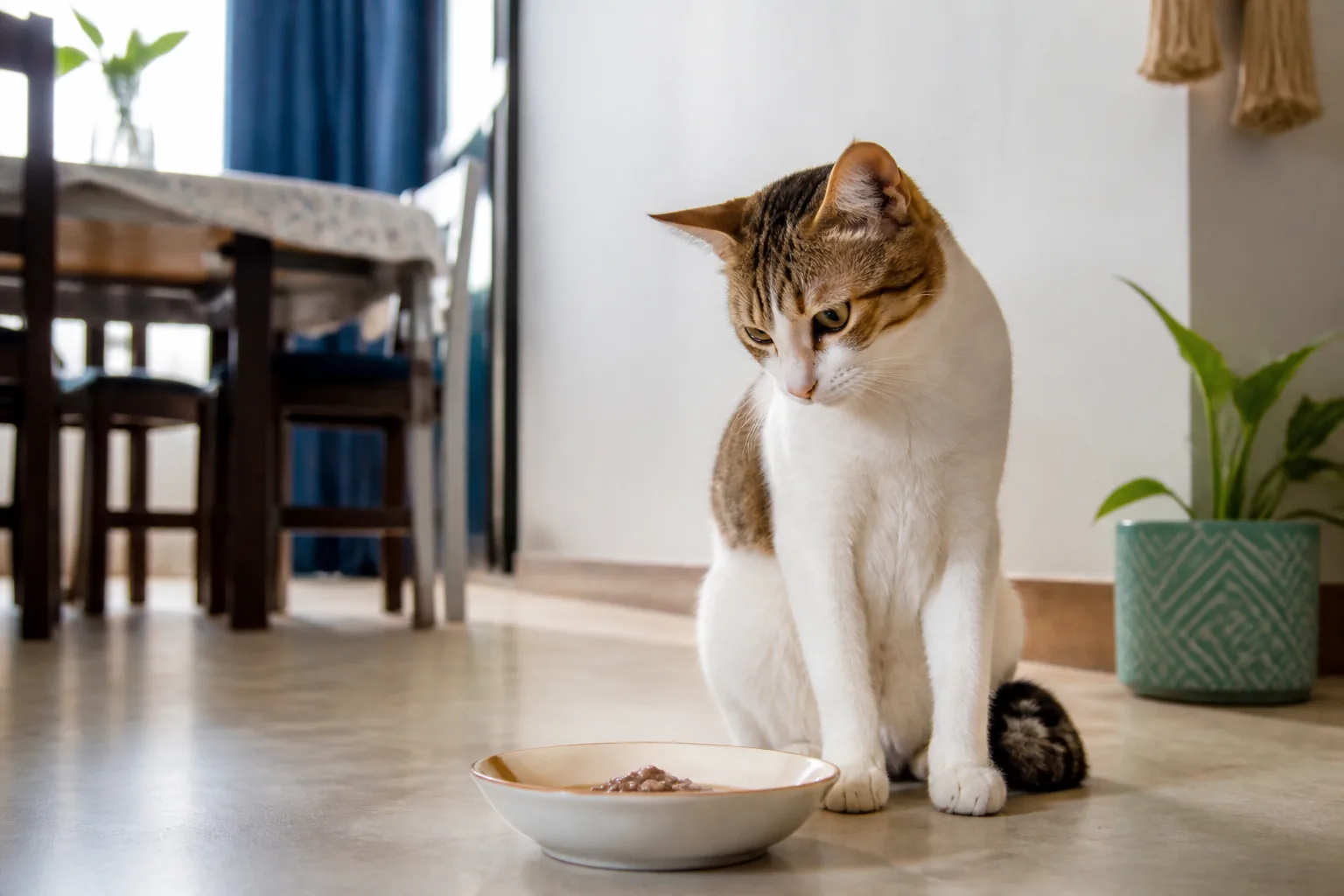
Appetite loss deserves attention—even when a cat looks quiet
If your cat is not eating, treat the change as a health signal rather than assuming they are being fussy. Nausea, pain, dental or swallowing trouble, systemic illness, medication effects, stress, and environmental change can all reduce intake. A cat may also want food but be unable to eat comfortably.
Check the amount actually eaten, behaviour around the bowl, water and litter habits, vomiting, energy, breathing, grooming, and recent changes. Contact a veterinarian early, especially for a kitten, senior, overweight cat, or a cat with existing disease. Emergency signs need a physical veterinary clinic immediately.
What else is happening right now?
This cannot diagnose the cause; it helps choose the safest next step. Select every sign you can actually see.
- Start with what you can observe. If you are unsure whether a sign is present, contact a veterinarian rather than guessing.
- Observe closely and speak with a vet if intake stays reduced. A household change can affect appetite, but it does not rule out pain or illness. Record the change and watch for warning signs.
- Speak with a veterinarian early. A stable cat can often begin with a veterinary conversation, but the cause may still require a physical examination and tests.
- Prioritise prompt veterinary contact. Age, body condition, or existing disease can reduce the margin for waiting. Ask whether a physical examination is needed promptly.
- Physical veterinary clinic now. An emergency selection overrides every other result. Do not wait for an online appointment or try a home remedy.
What does your cat do at the bowl?
The pattern can help a veterinarian decide what needs examining. It cannot identify the cause by itself.
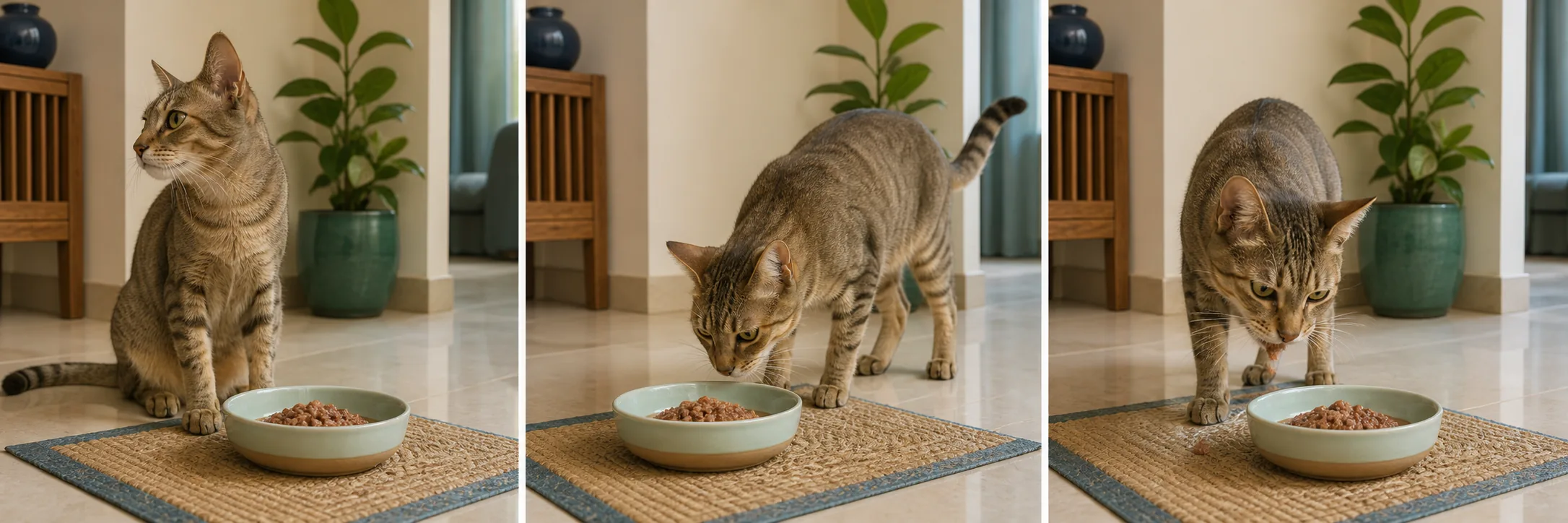
Does not approach food
The cat may stop asking for meals or ignore a familiar food. This can occur with many physical or emotional causes.
- Does not approach food. The cat may stop asking for meals or ignore a familiar food. This can occur with many physical or emotional causes. Safest next step: Measure what is actually eaten, record other changes, and contact a veterinarian early.
- Approaches, sniffs, then leaves. Lip licking, repeated swallowing, drooling, or backing away may accompany nausea or a learned food aversion. Safest next step: Remove food that triggers avoidance, do not keep pushing it, and discuss the pattern with a veterinarian.
- Drops food or chews unusually. A cat may be hungry but have mouth, tooth, jaw, or swallowing difficulty. The mouth and throat need hands-on assessment. Safest next step: Arrange a physical veterinary examination; do not place food into the mouth.
- A few licks are not a normal meal. Partial intake still matters. Treats or gravy can make it hard to judge how much complete food the cat consumed. Safest next step: Offer a measured familiar portion, feed separately in multi-cat homes, and record the amount left.
These behaviour patterns overlap and cannot diagnose the cause.
Prepare a clearer veterinary history
Do these steps while arranging advice; stop and use a physical clinic if an emergency sign appears.
Record the amount eaten
Offer a known amount of familiar, appropriate food and check what remains. Feed cats separately if needed.
- Record the amount eaten. Offer a known amount of familiar, appropriate food and check what remains. Feed cats separately if needed.
- Watch the pattern. Note whether your cat ignores food, turns away, drools, drops food, or seems unable to chew or swallow.
- Look beyond the bowl. Record water, urine, stool, vomiting, energy, breathing, grooming, pain, recent weight change, and possible exposures.
- Bring records and a short video. Share the food note, medicine and diet list, and a brief video only if it can be captured without stressing the cat.
Why can appetite change?
Reduced appetite is a broad clinical sign. Nausea or digestive discomfort, mouth or swallowing pain, pain elsewhere, fever or systemic disease, medication effects, stress, and food or environmental changes can look similar at home.
Cats can hide illness. Compare the behaviour with your cat's normal pattern rather than another cat's eating habits, and use observations to inform a veterinary assessment—not to name a disease.
- Nausea clues may include sniffing, turning away, lip licking, repeated swallowing, drooling, or vomiting.
- Oral difficulty may look like dropping food, chewing on one side, gagging, or preferring a different texture.
- Pain or illness may also cause hiding, stiffness, reduced grooming, weakness, or changed toileting.
- Stressors include a new pet, visitors, noise, boarding, a moved bowl, or conflict near food.
Cat not eating but drinking water: why it still matters
A cat may keep drinking while eating less. Some illnesses increase thirst; vomiting or reduced moisture from food can still contribute to dehydration. Tell the veterinarian whether drinking and urine output are normal, increased, or decreased.
Appetite loss with vomiting needs faster assessment. Record the pattern and contents without handling anything unsafe. If vomiting repeats, water will not stay down, blood or foreign material is present, or weakness develops, go to a physical veterinary clinic.
- Keep fresh water easy to reach in quiet locations.
- Do not force water into the mouth.
- Repeated unsuccessful attempts to urinate are an emergency.
- Do not induce vomiting or give human medicines.
What can you do while arranging care?
For an alert, stable cat without emergency signs, offer a small fresh portion of familiar, appropriate food in a clean shallow dish and a calm feeding area. Slightly warming wet food may increase aroma for some cats; remove it if the smell causes drooling, gagging, or avoidance.
Keep water accessible and prepare the last normal meal, amount eaten, vomiting, urine and stool changes, energy, recent weight change, foods, medicines, possible toxins, and household changes. These actions support comfort and history-taking; they do not treat the cause.
- Do not force- or syringe-feed unless a veterinarian has assessed the cat and taught a specific plan.
- Do not smear food on the paws or face or repeatedly hover over the bowl.
- Do not use human medicine, an old prescription, or an appetite product on your own.
- Ask before changing a veterinary diet prescribed for another condition.
The examination guides the next step
A veterinarian may assess body condition, hydration, temperature, mouth and teeth, heart and lungs, and abdomen. Blood or urine tests and imaging may be recommended according to the examination; not every cat needs every test.
Care may address nausea, pain, dehydration, electrolyte changes, inadequate nutrition, and the underlying problem. Some cats need supervised feeding support, including a feeding tube. This controlled veterinary method is different from pushing food into the mouth at home.
Go to a physical veterinary clinic immediately
Do not wait for an online appointment if any of these signs are present:
- Difficulty breathing, open-mouth breathing, collapse, seizure, or marked unresponsiveness
- Blue, purple, very pale, or yellow-tinged gums or skin
- Repeated vomiting with water not staying down, or blood or foreign material in vomit or stool
- Repeated litter-tray attempts with little or no urine
- Known or suspected toxin, medicine, thread, string, bone, or foreign-object ingestion
- Severe weakness, obvious pain, swollen abdomen, major trauma, or rapid deterioration
Do not try a home remedy, human medicine, forced feeding, or induced vomiting. Transport your cat safely to a physical clinic.
Online when it can be. In person when it must be. Connected throughout.
For an alert, stable cat without emergency signs, an online veterinarian can support the full care journey before, between, and after hands-on care.
How an online vet can help now
- Gather history, observe behaviour, and review photos, videos, and records
- Develop and prioritise differential possibilities from the available information
- Explain urgency, safe case-specific support, and diagnostics that may help distinguish the possibilities
- Prepare records and questions for local care when needed
- Review reports and plans, monitor response, and coordinate follow-up
When hands-on care is the next step
- A full mouth or abdominal examination is needed
- Hydration, circulation, or vital signs need direct assessment
- Blood, urine, imaging, or another diagnostic procedure is needed
- Procedures, injectable care, hospital feeding support, or stabilisation are needed
- Any emergency sign is present
Frequently asked questions
Can stress make a cat stop eating?
Stress can reduce appetite, including after household change, boarding, noise, or conflict around food. It should not be used to rule out pain or illness, so contact a veterinarian if intake has clearly changed.
Should I change the food if my cat refuses a meal?
Begin with a familiar, appropriate food and check freshness, the bowl, and the feeding location. If your cat is on a veterinary diet or repeatedly refuses food, ask the clinic before a major change.
Is it safe to warm cat food?
Gentle warming can make wet food smell stronger for some cats. It should be comfortably warm, never hot. Stop if the smell causes drooling, gagging, or avoidance, and do not let this delay veterinary contact.
What if my cat is not eating but is drinking water?
Drinking is useful information, but it does not make appetite loss safe to ignore. Note whether thirst and urine output changed, keep fresh water accessible, and contact a veterinarian early.
Can an online vet tell why my cat stopped eating?
An online veterinarian can gather history, observe behaviour, review records, develop and prioritise differential possibilities, and guide urgency. A confirmed diagnosis may need a physical mouth and abdominal examination or diagnostic tests, followed by online review and monitoring when appropriate.
Keep the food record—and contact a veterinarian early
If your cat is alert and stable, a Vetezy video consultation can support assessment, clinic preparation when needed, report explanation, and follow-up. Emergency signs require a physical veterinary clinic immediately.
Talk to an expertThis content is for general educational purposes and does not replace a veterinary examination, diagnosis, or treatment. If your pet shows emergency signs or is seriously unwell, contact a physical veterinary clinic immediately.