Straining with no urine + open-mouth breathing + collapse or poisoning?
Go to a physical veterinary clinic now. These are not video-only or “wait until morning” problems.
To care for a cat at home in India, keep six basics consistent: core vaccines and rabies protection, vet-planned parasite control, a clean litter box, complete meat-based nutrition with fresh water, simple grooming and at least one veterinary wellness check each year. Indoor cats still need preventive care because infection can arrive on shoes, cats slip through doors and illness is easy to miss. Most importantly, a cat who has not eaten for 24 hours needs veterinary advice that day—not a new flavour of food and more waiting.
A 60-second cat health check
Tick every sign you can see right now. This cannot diagnose the cause; it chooses the safest next step.
If your instinct says your cat is seriously unwell, do not wait for a web checklist—go to a clinic.
- Physical clinic now. One or more emergency signs are selected. Place your cat in a carrier, keep handling minimal and arrange immediate transport.
- Contact a vet today. This change should be assessed today. A video vet can triage it, but may direct you to a physical clinic.
- Book a video consultation. Your cat appears stable, but this new concern deserves veterinary guidance and a clear home-care plan.
- Monitor the normal baseline. No warning sign is selected. Keep checking appetite, urine, stool, breathing and usual behaviour once a day.
- Select any signs you see. Your safest next step will appear here.
The five-second daily baseline
Did your cat eat the usual measured amount today? A full bowl can hide reduced intake.
- Appetite: Did your cat eat the usual measured amount today? A full bowl can hide reduced intake.
- Urine: Are the number and size of urine clumps normal for this cat? Straining or no urine is an emergency.
- Stool: Is stool frequency and consistency close to normal? Note diarrhoea, blood or repeated straining.
- Breathing: At rest, is the mouth closed and breathing quiet? Open-mouth or laboured breathing needs a clinic now.
- Behaviour: Is your cat using the usual sleeping spots, jumping normally and interacting as expected?
Six changes never to dismiss
The food bowl stays full
No food for 24 hours is a same-day vet situation. A quiet kitten who skips meals needs help sooner.
Straining but no urine
Frequent litter visits may mean a blocked urethra—especially in a male cat. This is an emergency.
Breathing with the mouth open
Open-mouth or laboured breathing needs a physical clinic immediately.
A new hiding habit
Staying under the bed, avoiding jumps or resisting touch can signal pain or illness.
A greasy, unkempt coat
A cat who stops grooming may have pain, fever, dental disease or another illness—not laziness.
Peeing outside the box
First think “box problem or health problem,” never revenge. Blood or straining needs same-day care.
One glance. Three levels of action.
| Check | Reassuring | Vet today | Physical clinic now |
|---|---|---|---|
| Appetite | Usual measured amount | Much less or none for 24 hours | Weak kitten; collapse; repeated vomiting |
| Litter | Normal urine and stool | Accidents, blood, crying | Straining with little or no urine |
| Breathing | Mouth closed, quiet at rest | Faster or different than usual | Open-mouth, laboured, blue/gray gums |
| Behaviour | Usual play and hiding pattern | New hiding, poor grooming | Collapse, seizure, cannot stand |
Cat vaccination schedule in India
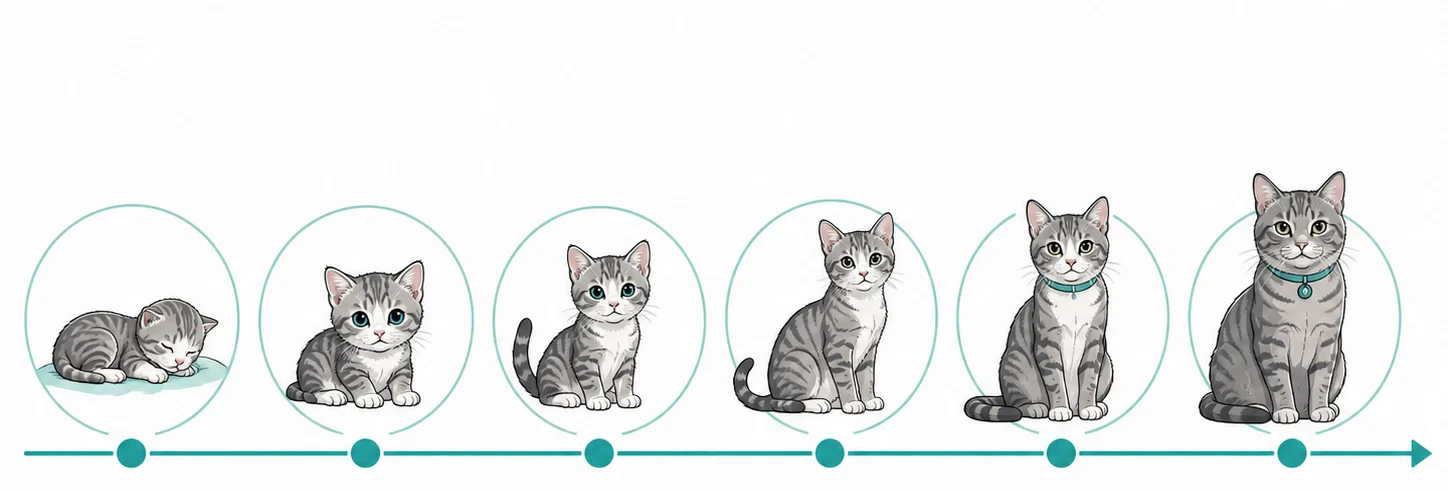
Adult years: Keep at least one wellness examination each year. Vaccine timing follows risk, local rabies requirements and the licensed product used.
| Age or stage | What to arrange | Why it matters |
|---|---|---|
| 2–3 weeks | First deworming | Kittens can acquire roundworms early; repeat on the vet’s weight-based schedule. |
| 6–8 weeks | First tricat/CRP vaccine | Covers panleukopenia plus common respiratory viruses. |
| Every 3–4 weeks through 16 weeks | Further combination doses | Repeated doses bridge the period when maternal antibodies can interfere. |
| Around 12 weeks | Anti-rabies vaccination | India is rabies-endemic; follow the vet, local rules and licensed label. |
| 6–12 months after kitten series | First core booster | Book the date written on the vaccination card. |
| Adult years | Annual wellness exam; vaccines when due | An annual examination does not automatically mean every vaccine is annual. |
Use a calendar, not guesswork
Kittens need repeated deworming through kittenhood. Adult timing depends on outdoor access, hunting, fleas, diet and local exposure. Use the current weight and ask your vet to write the next date.
Some dog products containing permethrin can be fatal to cats. Never split a dog spot-on. If the wrong product touches your cat, take the package and go to a clinic immediately.
Most “naughty” behaviour is information
A cat who suddenly pees outside the box is often saying “this toilet is unacceptable” or “urinating hurts.” Punishment answers neither. Check for pain or straining first, then fix the setup.
Scoop every day
Remove urine clumps and stool before odour builds. A clean box also makes changes in urine easier to notice.
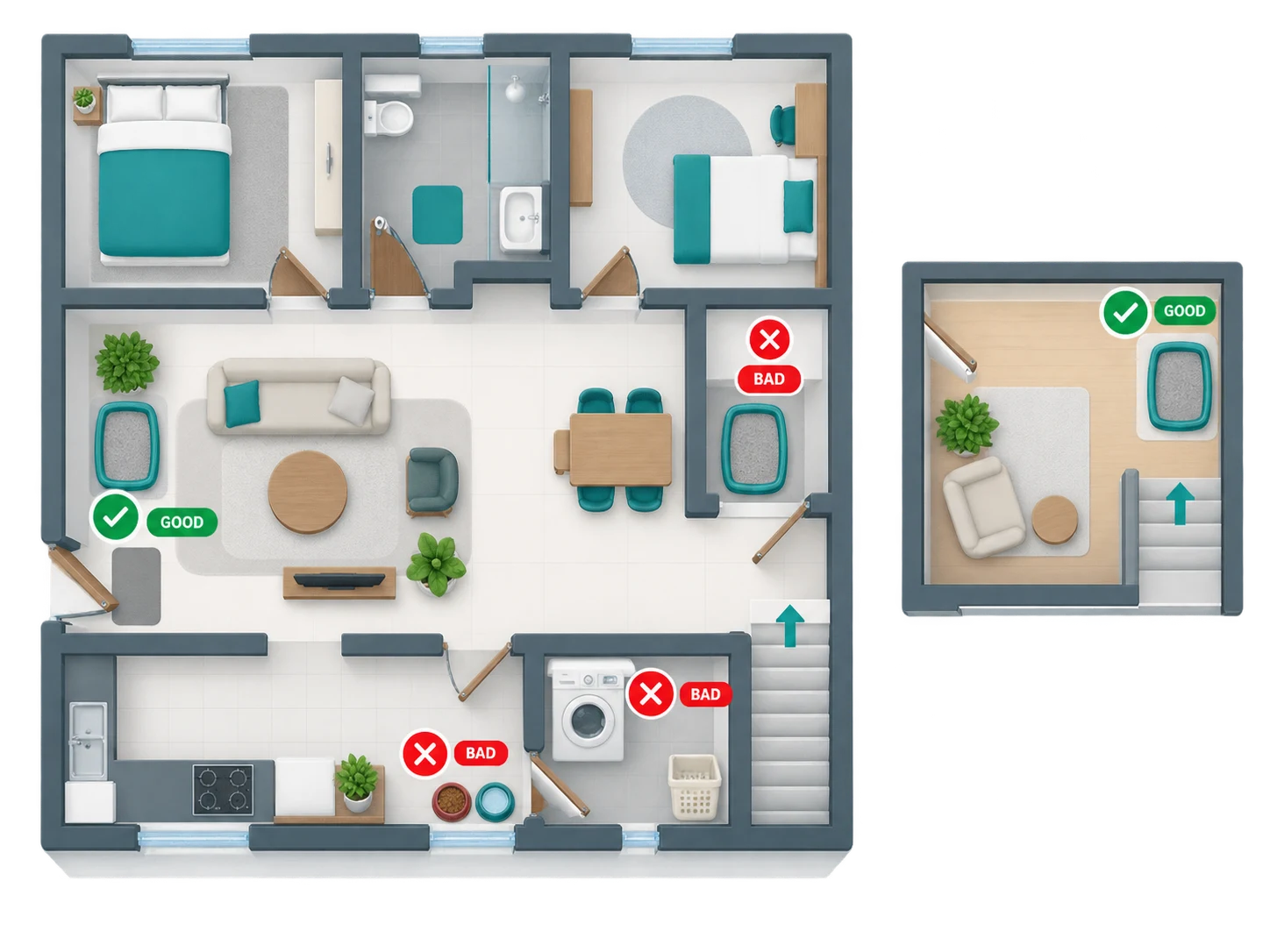
- Scoop every day. Remove urine clumps and stool before odour builds. A clean box also makes changes in urine easier to notice.
- Give enough choice. Use one box per cat, plus one spare. Spread them out so one cat cannot guard every toilet.
- Choose quiet access. Keep boxes away from food, washing machines, slamming doors and trapped corners.
- Use accepted litter. Choose an unscented texture your cat accepts. Change litter type gradually whenever possible.
- Wash simply. Use plain soap and water, rinse fully and dry well. Avoid strong phenyl or perfumed residue on the tray.
Never: punish, rub the cat’s nose in urine, use strong phenyl on the tray, or wait if there is straining or no urine.
Is it the box, the diet—or a health problem?
A Vetezy veterinarian can watch your cat move at home, review the setup and tell you whether you can adjust the routine or need a clinic.
What should a cat eat? Hint: not milk
Cats are obligate carnivores, but “meat-based” does not mean plain chicken alone. A daily diet must be complete and balanced for the life stage. Rice, roti, dal, milk or family leftovers cannot supply everything a cat needs.
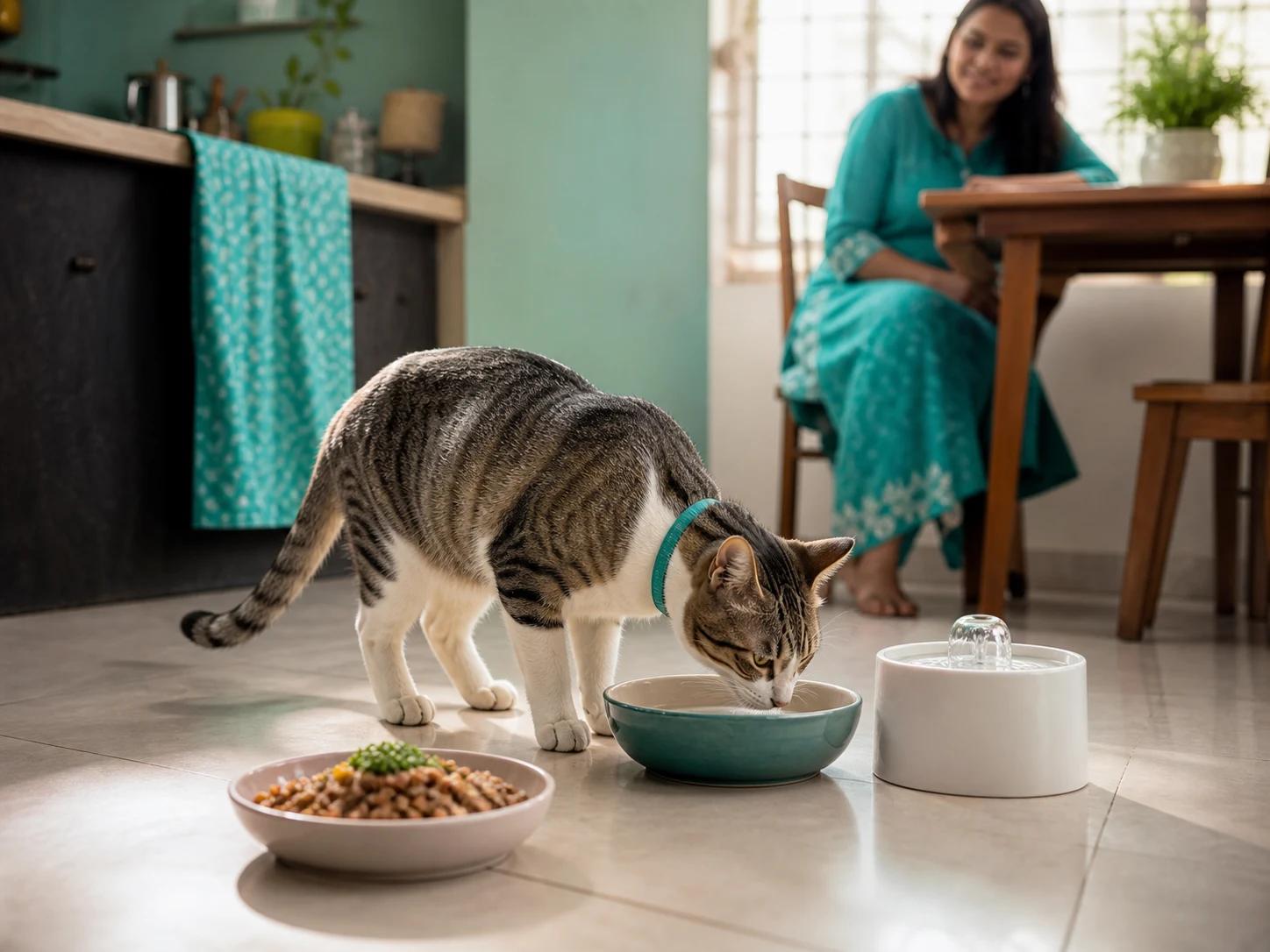
| Question | Practical answer | Why |
|---|---|---|
| Daily base? | Complete commercial food, or a complete home diet formulated by a veterinarian | Plain meat or household food can miss essential nutrients. |
| Can cats drink milk? | Skip regular cow or buffalo milk; offer fresh water | Many adult cats digest lactose poorly, causing diarrhoea. |
| How to increase water? | Wide bowls in several spots, wet food, or a clean fountain | More dietary moisture supports hydration. |
| Free-feed all day? | Measure the daily portion and track what is eaten | A full bowl hides appetite loss and encourages weight gain. |
Grooming: brushing yes, bathing rarely
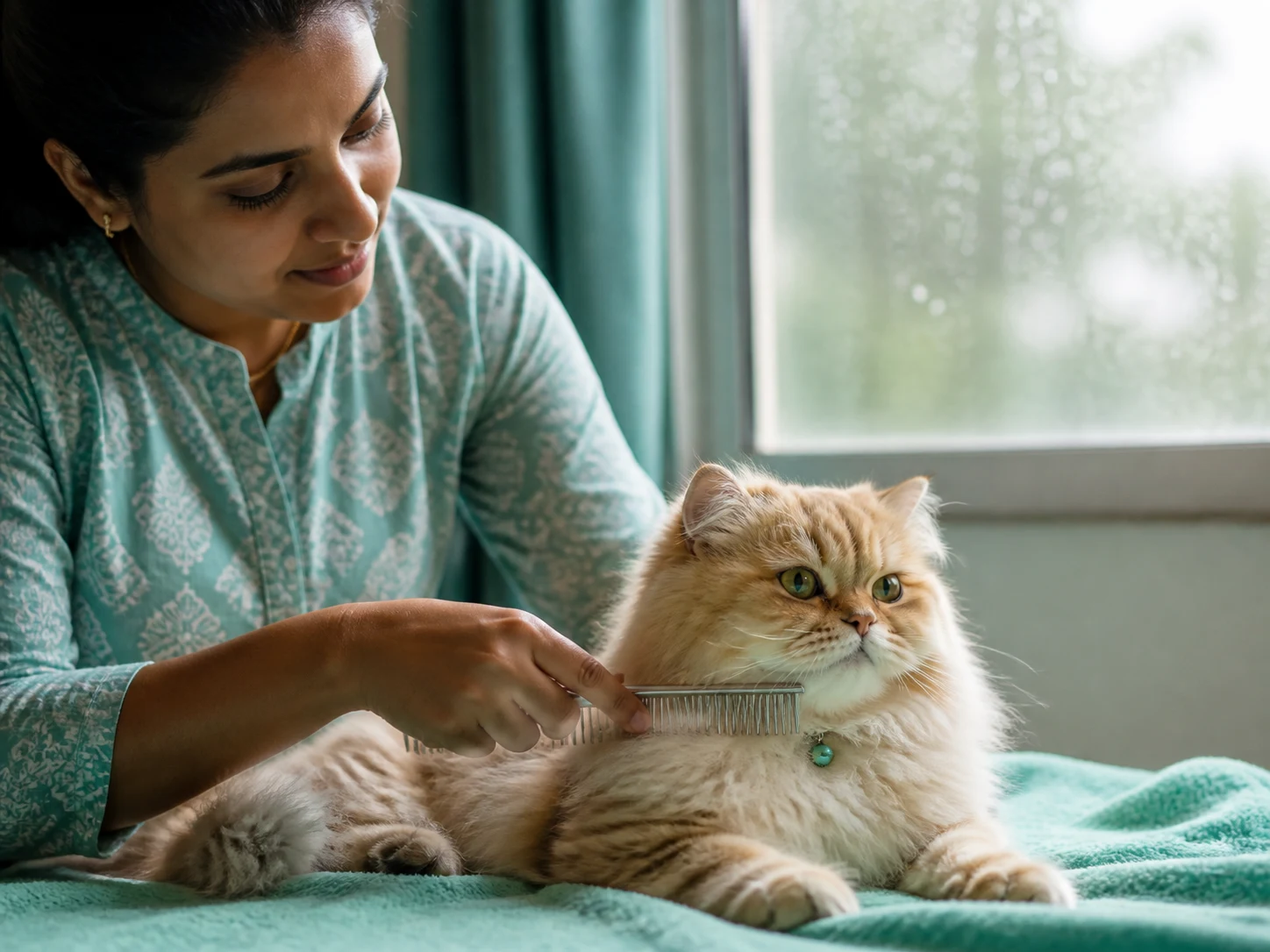
Persian care in Indian humidity
Wipe eye creases daily with a plain damp cotton pad and use a fresh pad for each side. Comb the armpits, chest, belly and behind the ears every day during monsoon.
If a mat is tight to the skin, do not cut it with scissors—the skin can lift into the blades.
| Task | Useful routine | Call a vet when |
|---|---|---|
| Brushing | 2–3× weekly; daily for long hair | There are tight mats, skin pain or sudden coat neglect. |
| Bath | Rarely; cat shampoo only | The substance may be toxic or the coat changed suddenly. |
| Nail trim | Roughly every 3–4 weeks | You cannot see the quick or the cat is painful. |
| Ears and eyes | Weekly glance | There is smell, discharge, redness, cloudiness or scratching. |
| Mouth | Notice breath, drooling and eating | Bad breath persists or eating appears painful. |
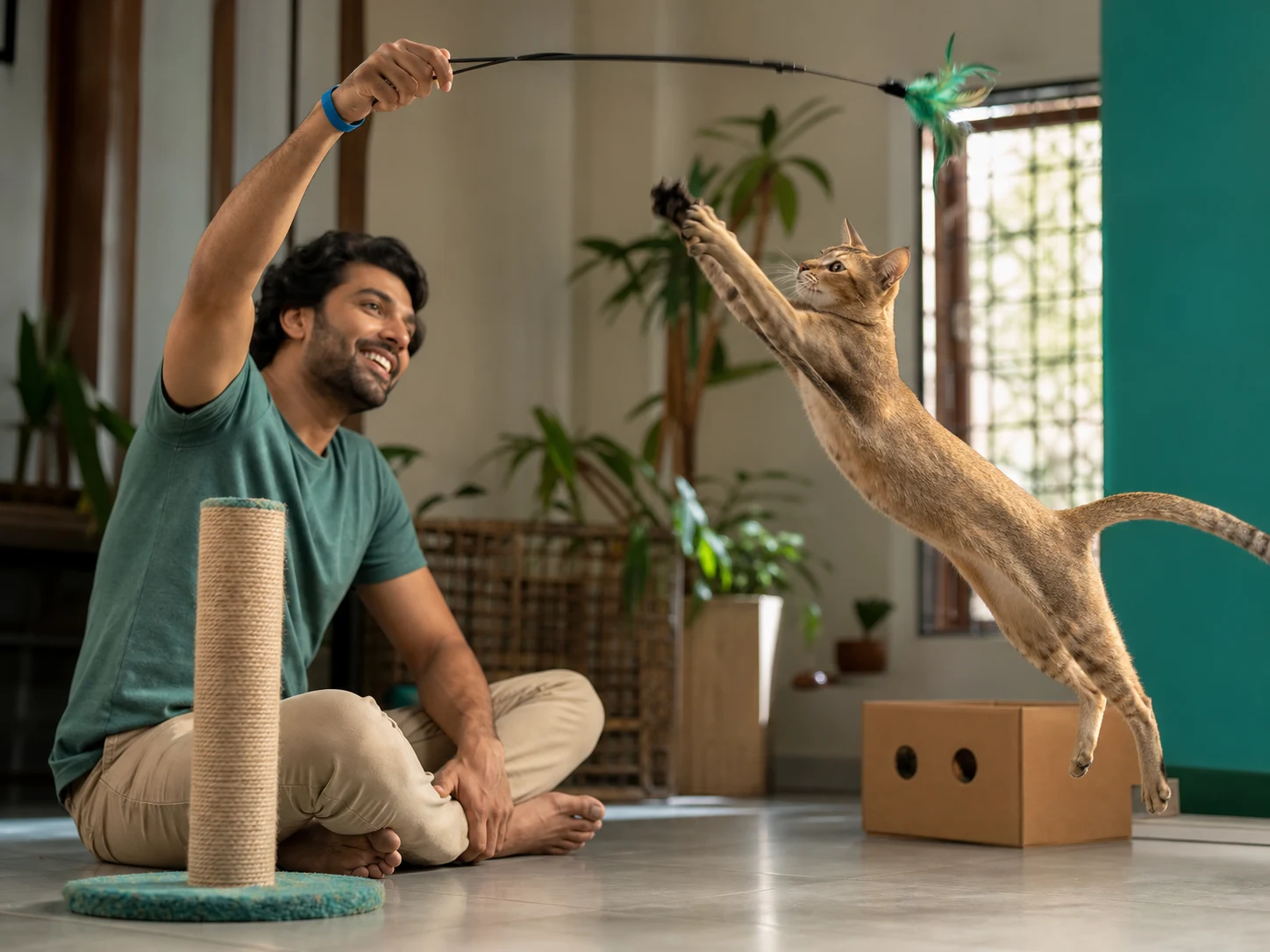
Safe, bored and gaining weight
Measure meals and aim for two ten-minute hunting-style play sessions daily. Let the cat stalk, chase and catch the toy, then end with part of the measured meal.
Sterilisation: Discuss spay/neuter by about five months. The examining veterinarian sets the individual date.
Go to a physical clinic immediately if your cat has:
- Repeated straining with little or no urine—especially a male cat
- Open-mouth or laboured breathing, or blue/gray gums
- Collapse, seizure, inability to stand or severe weakness
- Suspected paracetamol, lily, rat-poison, phenyl or dog spot-on exposure
- Repeated vomiting with weakness or yellow eyes, ears or gums
- A balcony/window fall, or a serious bite from an unknown animal
Place the cat in a carrier with a towel, keep handling minimal and call the nearest open clinic while travelling. Do not force food or water into a breathless, vomiting, collapsed or seizuring cat.
Early action keeps many problems simpler
A litter change may be solved with a better setup—or reveal urinary pain before the cat becomes critically ill. Reduced appetite may lead to a diet correction—or uncover dental, stomach, kidney or liver disease while the cat is stable. Observation at home is valuable; guesswork with medicines is not.
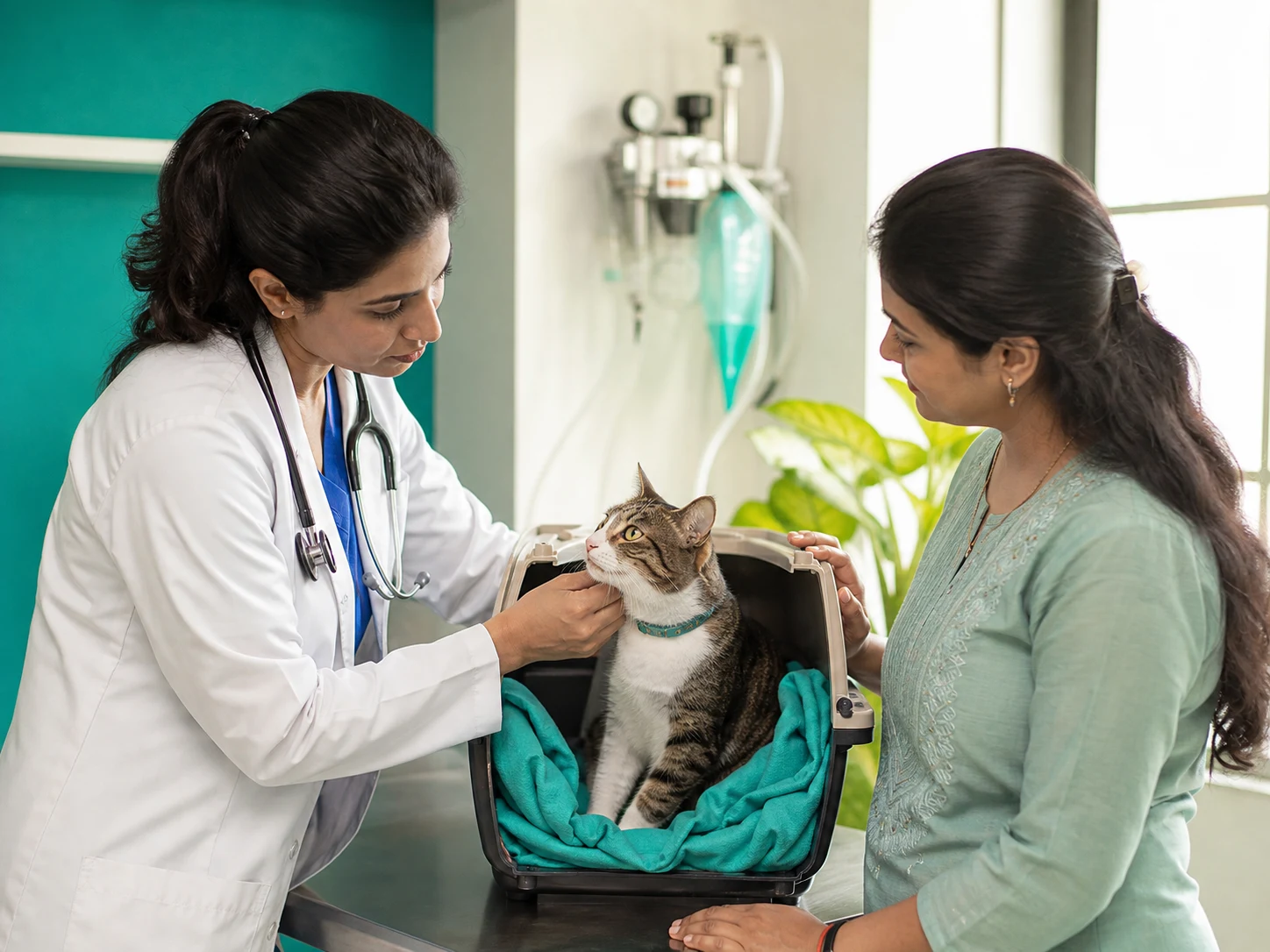
What an online vet can—and cannot—do
Can help
- Build vaccine and deworming calendars
- Review food labels, meals, water and body condition
- Watch relaxed posture, walking and breathing at home
- Troubleshoot litter setup and household stress
- Triage eye, ear, skin, appetite and behaviour changes
Cannot replace
- Vaccine injections
- Feeling a painful or enlarged bladder
- Urinalysis, blood tests, X-rays or ultrasound
- Oxygen, IV support, urinary catheter or surgery
- Monitoring a blocked, poisoned or collapsing cat
What basic cat care may cost in India
Planning ranges checked 24 August 2026. Prices vary by city, clinic, government/NGO availability, brand, body weight and lab. These are estimates, not quotes.
A teaching or government clinic may charge much less than a private metro hospital. Ask whether a surgery quote includes examination, blood tests, anaesthesia, pain control and follow-up.
Ten minutes to make an Indian home safer
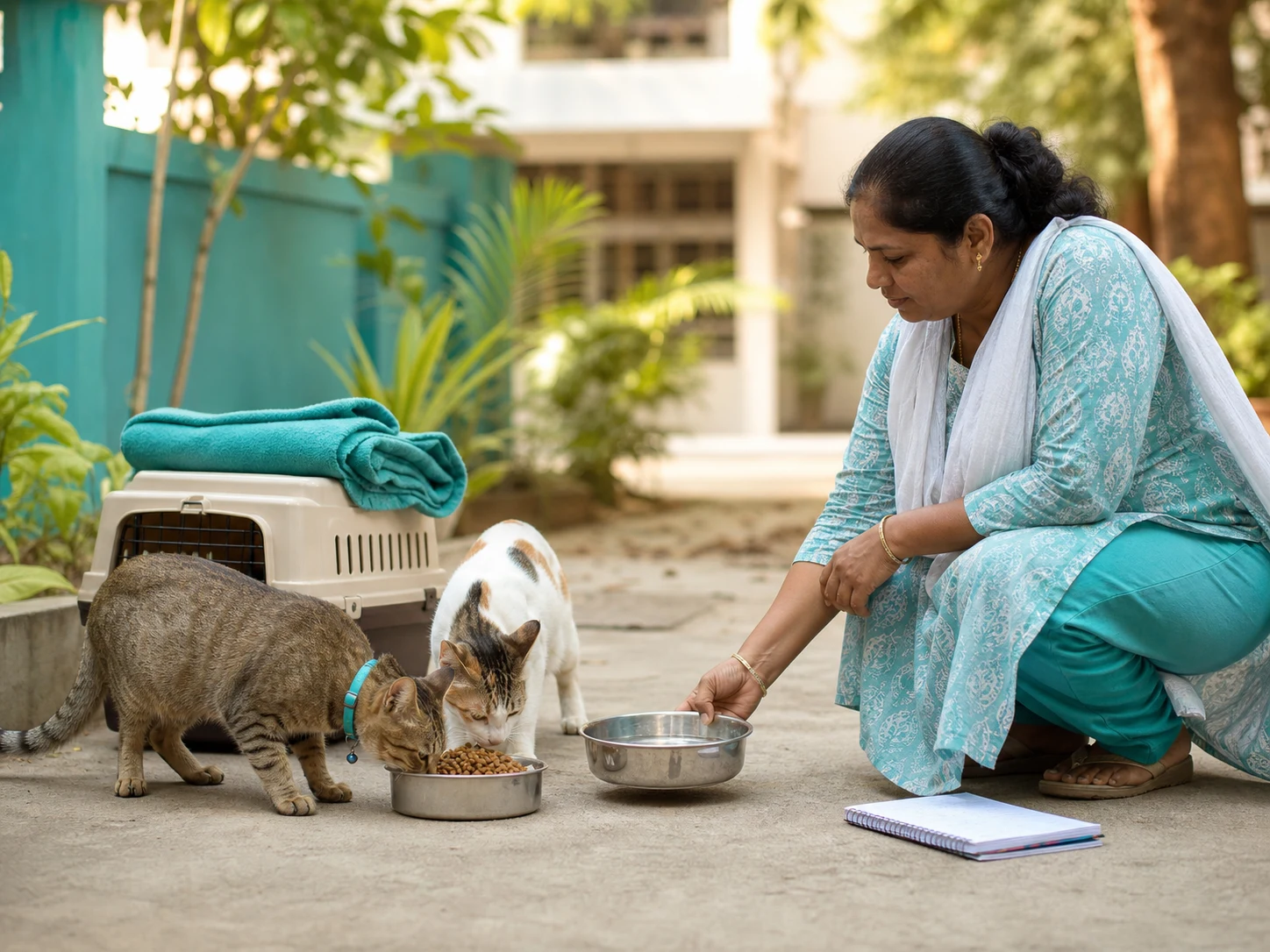
The same care, with better coordination
Indie cats need the same vaccines, parasite care, complete nutrition and emergency attention as pedigree cats. Feed community cats at a clean, low-traffic spot, leave fresh water and record vaccination, deworming and sterilisation dates so care is not doubled or missed.
Use a humane carrier or trap with help from a veterinarian or experienced welfare group. Never guess a medicine amount from another cat.
Cat-care FAQs
Can I give my cat milk? She loves it.
Regular cow or buffalo milk is not cat food. Many adult cats cannot digest lactose well, so milk can cause diarrhoea. Fresh water is the only everyday drink needed.
Do indoor cats need a rabies vaccine in India?
Yes. India is rabies-endemic, indoor cats can slip outside or meet another animal, and current vaccination makes bite or scratch assessment clearer.
How often should I bathe my cat?
Most healthy short-haired cats rarely need a bath. Bathe only when something on the coat must be removed, and use cat shampoo.
Billi ne ghar mein susu karna shuru kar diya—kya karein?
First check whether urine is coming out. Straining with little or no urine is an emergency, especially in a male cat. If medically clear, improve the litter setup and never punish.
When should I sterilize my kitten in India?
Discuss spay or neuter by about five months. The examining veterinarian will choose the individual date after a health check.
What is the cat vaccination schedule in India?
Tricat/CRP commonly starts at 6–8 weeks and repeats every 3–4 weeks through 16 weeks. Rabies is commonly given from around 12 weeks according to the vet, local requirements and product label.
How often should I deworm my cat?
Kittens need repeated deworming through kittenhood. Adult frequency depends on outdoor access, hunting, fleas, diet and local exposure.
My cat has not eaten since yesterday. Is it an emergency?
A cat who has not eaten for 24 hours needs veterinary advice that day. A kitten who skips meals and becomes quiet or weak should be assessed sooner.
Build a cat-care plan that fits your home
Bring the vaccination card, food label, current weight and a short video of any concern. A registered veterinarian can tell you honestly when your cat needs hands-on care.
Book a Vetezy video consultation · ₹499–₹1,499
Dr. Vikas Godara, BVSc & AH, DVM
DVM, Oklahoma State University (USA) · 11+ years of clinical experience · VCI Reg. No. 7503 · Haryana Veterinary Council Reg. No. 2649 · USDA-accredited veterinarian · Member, AVMA (No. 323100) & CVMA (No. 49706)
This guide supports informed decisions and does not replace a physical examination, diagnosis or emergency care.
Clinical references
- WSAVA: 2024 Guidelines for the Vaccination of Dogs and Cats
- Merck Veterinary Manual: Preventative Health Care
- Merck Veterinary Manual: Feline Panleukopenia
- Merck Veterinary Manual: Urinary Diseases of Cats
- Merck Veterinary Manual: Roundworms in Small Animals
- Merck Veterinary Manual: Ectoparasiticides
- Merck Veterinary Manual: Feline Hepatic Lipidosis
- WSAVA Global Nutrition Committee: Selecting a Pet Food
- International Cat Care: Home Modifications for Cats
- AVMA: Spaying and Neutering